Electricity retailers are changing the way Australians use and pay for energy.
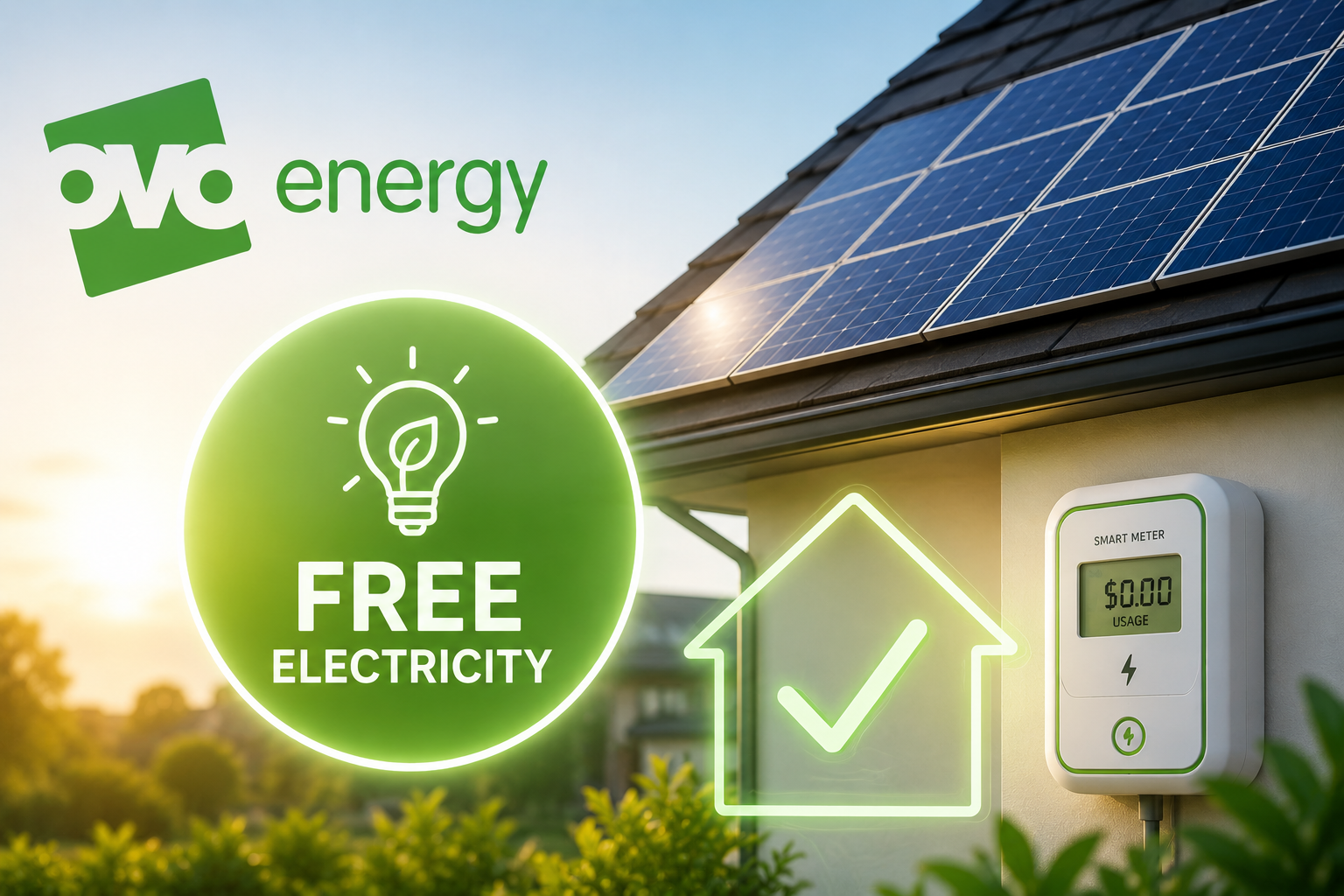
One of the most talked-about offers is OVO Energy’s Free 3 Plan, which provides eligible customers with free electricity usage between 11am and 2pm every day.
At first glance, that sounds like a simple way to eliminate part of your electricity bill.
But there is an important catch:
Free electricity does not mean a completely free electricity bill.
Supply charges, other tariff rates, eligibility requirements and your household’s electricity usage still matter.
For homeowners with solar panels, batteries, EVs, electric hot water systems or high daytime electricity consumption, understanding how the plan works is particularly important.
This guide explains OVO Energy’s Free 3 Plan, who can access it, how the savings work, whether you still need solar or a battery, and what to check before switching electricity retailers.
Quick Answer: Is OVO Electricity Really Free?
Partly.
The OVO Free 3 Plan is designed to provide $0/kWh electricity usage between 11am and 2pm for eligible customers.
However, your electricity bill can still include:
- Daily supply charges
- Electricity charges outside the free period
- Higher peak or time-of-use rates
- Other applicable fees and charges
- Solar feed-in arrangements, where applicable
So the correct way to think about the offer is:
Free electricity during a specific window — not a completely free electricity bill.
What Is OVO Energy’s Free 3 Plan?
OVO Energy’s Free 3 Plan is an electricity tariff designed around Australia’s changing energy market.
The basic concept is straightforward:
Every day:
11am → 2pm
Electricity usage = $0/kWh
This three-hour period coincides with a time when Australia’s electricity system can have substantial solar generation.
The plan encourages households to shift electricity consumption into this period rather than using as much power during more expensive periods.
Do You Need Solar Panels to Get Free Electricity?
No.
One of the interesting aspects of the offer is that you don’t necessarily need rooftop solar to benefit.
If you’re an eligible customer with the required smart meter and the plan is available at your property, you can potentially use grid electricity during the free period.
That means the offer could appeal to:
- Homeowners without solar
- Renters
- Apartment residents
- Solar households
- EV owners
- Households with electric hot water
- Homes with high daytime energy consumption
However, plan availability and eligibility depend on your location and electricity connection, so always check your exact postcode and current plan terms before switching.
Why Is OVO Offering Free Midday Electricity?
The offer is connected to Australia’s rapidly changing electricity generation mix.
Australia has experienced enormous growth in rooftop solar.
During periods of strong solar generation, particularly around the middle of the day, electricity supply can become abundant.
Wholesale electricity prices can therefore fall substantially, and at certain times can even become negative.
Retailers can use innovative tariffs to encourage customers to consume more electricity when supply is plentiful.
This creates a different approach to electricity pricing:
More solar generation
↓
Lower midday wholesale prices
↓
Encourage daytime electricity use
↓
Reduce pressure on evening demand
↓
Potentially lower customer energy costs
What Can You Run During the Free 3 Hours?
The biggest opportunity is to move high-energy activities into the 11am–2pm period.
For example:
Washing machine
Instead of running several loads at night, schedule them during the free period.
Dishwasher
Run the dishwasher around midday.
EV charging
If your EV is parked at home during the day, midday charging could significantly reduce charging costs.
Air conditioning
If you need cooling during the day, the free electricity period can be useful.
Pool pump
Schedule the pool pump to operate during the free period where practical.
Electric hot water
Where your system and controls allow it, heating water during low-cost periods can reduce electricity expenses.
Tumble dryer
High-energy appliances such as dryers can consume substantial electricity, making them useful candidates for daytime scheduling.
How Much Could You Save With Free Midday Electricity?
Your savings depend heavily on how much electricity you can shift into the free period.
For example, suppose a household normally uses:
8 kWh between 11am and 2pm
If that electricity would otherwise cost:
30c/kWh
then the theoretical energy-charge saving would be:
8 × $0.30 = $2.40 per day
Over 30 days:
$72
Over a year:
$876
But this is only an illustrative example, not a guaranteed saving.
Your actual result depends on:
- Your electricity usage
- Your tariff
- How much usage occurs between 11am and 2pm
- Your usage outside the free period
- Supply charges
- Your household’s daily routine
- Whether your retailer’s current pricing changes
This is why you should compare the entire electricity bill, rather than focusing only on the free three-hour window.
The Most Important Catch: Your Other Electricity Rates Matter
Imagine two electricity plans.
Plan A — Free 3
11am–2pm: $0/kWh
But electricity outside this window may be more expensive.
Plan B — Standard Time-of-Use Plan
No free period, but lower rates during some other periods.
Which one is cheaper?
It depends on your household.
A family that consumes large amounts of electricity between 11am and 2pm could benefit significantly.
But a household that is mostly empty during the day may get relatively little value from the free period.
Who Benefits Most From OVO Free Electricity?
1. Households With High Daytime Consumption
If you are home during the day and use lots of electricity, the plan may be attractive.
2. Electric Vehicle Owners
EV charging can consume a substantial amount of electricity.
If your vehicle is home during the free period, scheduling charging between 11am and 2pm could reduce charging costs.
However, always check the plan’s current EV and meter requirements.
3. Families With Young Children
Households that are home during the day may have more opportunities to use:
- Air conditioning
- Washing machines
- Dishwashers
- Cooking appliances
- Hot water
- Entertainment systems
during the free window.
4. People Working From Home
Working from home can increase daytime electricity consumption.
Air conditioning, computers, cooking, hot water and appliances can all contribute to higher daytime usage.
5. Homes Without Solar
This is particularly interesting.
You don’t necessarily need your own rooftop solar system to use the free electricity period.
You can potentially benefit by purchasing electricity from the grid at $0/kWh during the eligible period.
What About Existing Solar Customers?
Solar homeowners need to be more careful.
If you already have rooftop solar, you need to compare:
Solar generation
Self-consumption
Feed-in tariff
Retail electricity rates
Free electricity period
A solar household may already generate significant electricity during 11am–2pm.
That means the free grid electricity may not automatically create a huge additional benefit.
For example, if your solar system is producing more electricity than your home is consuming at midday, you may already be meeting much of your daytime demand.
The economics can become more interesting when you have:
- High daytime consumption
- An EV
- Electric hot water
- Large air-conditioning loads
- A battery
- Low feed-in tariffs
Should You Get Solar If OVO Gives You Free Electricity?
Free midday electricity does not necessarily eliminate the value of solar.
Solar and a free electricity tariff solve different problems.
Solar
Generates your own electricity.
Free 3
Provides a specific period where eligible grid electricity usage is charged at $0/kWh.
Solar can still provide value outside the free window, particularly when your household consumes electricity in the:
- Early morning
- Afternoon
- Evening
- Night
And solar can reduce your dependence on retail electricity prices.
What About a Solar Battery?
This is where the calculation becomes more complicated.
A battery stores excess solar electricity and allows you to use it later.
For example:
Solar generates electricity during the day
↓
Excess electricity charges battery
↓
Battery stores energy
↓
You use stored energy in the evening
A free midday tariff creates another option:
Use free grid electricity during 11am–2pm
rather than necessarily using stored battery energy.
Therefore, battery owners should consider how their battery is configured and how the retailer’s tariff affects charging and discharge behaviour.
Should You Charge Your Battery From the Grid During Free Hours?
Potentially — but do not assume it is automatically beneficial.
Some batteries and energy-management systems can charge from the grid.
However, whether this makes financial sense depends on:
- Battery efficiency
- Battery degradation
- Evening electricity rates
- Solar availability
- Export rates
- Retailer conditions
- Battery control settings
You should calculate the value of charging the battery with free electricity versus preserving available solar energy.
OVO Free Electricity and EV Charging
EV owners are potentially one of the biggest beneficiaries of free daytime electricity.
Suppose your EV consumes:
15 kWh per 100 km
and you drive:
40 km per day
Your approximate daily energy requirement could be:
6 kWh
If that charging can be moved into the free electricity period, the electricity component of that charging could potentially be $0/kWh under the eligible free period.
That can make a meaningful difference over a year.
For example, at an illustrative electricity rate of 30c/kWh:
6 kWh × $0.30 = $1.80/day
Approximately:
$657/year
Again, this is an illustration rather than a guaranteed saving.
Smart Meter Requirement
A smart meter is an important part of these types of time-based electricity plans.
The meter allows the retailer to determine:
- When electricity was consumed
- How much electricity was consumed
- Which tariff period applies
If you don’t have the required meter, you may not be able to access the plan.
Before switching, confirm:
“Does my property have the required smart meter, and is my connection eligible for this plan?”
Is OVO Free 3 Available Everywhere in Australia?
Not necessarily.
Energy plans vary according to:
- State
- Distribution network
- Meter configuration
- Customer type
- Postcode
- Retailer availability
A plan that appears online may not necessarily be available at your specific property.
Always check your postcode and current eligibility before making a decision.
What Happens Outside 11am–2pm?
This is one of the most important questions.
The electricity isn’t necessarily free outside the three-hour window.
Depending on the tariff, you may have different electricity rates at other times.
Therefore, don’t compare plans using only:
“3 hours of free electricity every day.”
Compare the complete tariff structure.
Look at:
Daily supply charge
How much do you pay every day regardless of consumption?
Peak rate
What does electricity cost during expensive periods?
Shoulder rate
Is there an intermediate rate?
Off-peak rate
What rate applies overnight or during other low-demand periods?
Feed-in tariff
If you have solar, how much are you paid for exports?
Free Electricity vs Solar — Which Is Better?
There is no universal winner.
| Feature | OVO Free Electricity | Rooftop Solar |
|---|---|---|
| Upfront installation | No solar installation required | Requires system |
| Free electricity | Specific eligible period | Generated when sun is available |
| Ownership | No equipment ownership required | You own system if purchased |
| Works without solar | Yes, subject to eligibility | No |
| Evening generation | No | Solar + battery required |
| EV charging | Potentially very attractive midday | Can use solar generation |
| Long-term energy independence | Limited | Higher |
| Feed-in tariff | N/A without solar | Potential export income |
| Battery compatibility | Depends on setup | Yes |
| Electricity retailer dependency | High | Lower |
| Contract flexibility | Depends on plan | Solar system is an owned asset |
Free Electricity + Solar + Battery: The Smartest Strategy?
For some households, combining different technologies can produce the strongest result.
For example:
Morning
Use solar where available.
11am–2pm
Shift high-energy consumption into the free electricity window.
Afternoon
Use solar generation or battery energy.
Evening
Use stored battery energy where financially beneficial.
Overnight
Use lower-cost tariff periods where available.
This is the future of household energy management:
Don’t simply generate more energy. Use energy at the time it has the greatest financial value.
How Feed-In Tariffs Affect the Decision
Solar owners should pay close attention to their feed-in tariff.
Suppose your retailer pays you:
5c/kWh
for exported solar.
But importing electricity later costs:
30c/kWh
There is a large difference.
Instead of exporting excess solar at 5c/kWh, a homeowner may potentially get greater value by:
Using the solar themselves
or
Storing it in a battery for later use.
However, if you have access to free grid electricity during 11am–2pm, you need to consider how that changes your energy strategy.
Why Australia’s Electricity Market Is Moving Toward Time-Based Pricing
Australia’s electricity system is changing rapidly.
Traditional electricity pricing largely treated electricity as a commodity with relatively consistent pricing structures.
But renewable energy introduces a different pattern.
Solar generation is strongest during daylight.
Electricity demand often increases later in the day.
This creates a mismatch:
Lots of electricity → midday
High household demand → evening
Time-based tariffs attempt to encourage consumers to move their electricity use toward periods when energy is more abundant.
This can benefit both:
- Consumers who change their behaviour
- The electricity grid
How to Maximise Your Savings With Free Electricity
If you’re eligible, don’t simply switch plans and hope for savings.
Change your household energy habits.
1. Schedule your washing machine
Run large loads between 11am and 2pm.
2. Run your dishwasher
Set the dishwasher to start during the free window.
3. Charge your EV
Where practical, schedule EV charging during the free period.
4. Run your pool pump
Move pool pumping to the free period where appropriate.
5. Use your air conditioner strategically
If cooling is needed during the day, the free period can be valuable.
6. Heat water strategically
Where your hot-water system allows it, schedule heating around low-cost periods.
7. Monitor your electricity usage
Your smart meter data can help you determine whether the plan is genuinely saving money.
How Much Could an Australian Household Save?
There is no universal savings figure.
Your savings depend on how much electricity you can shift into the free period.
A useful way to estimate your potential benefit is:
Potential annual free-period saving =
Electricity shifted into free hours × your normal electricity rate × number of days
Then subtract or account for any difference in:
- Supply charges
- Peak rates
- Other tariff charges
- Feed-in income
- Existing solar savings
This is a much more reliable method than relying on a headline advertising figure.
Before Switching to OVO Free 3: Use This Checklist
Ask:
✔ Is the plan available at my postcode?
✔ Do I have the required smart meter?
✔ What is the daily supply charge?
✔ What are the electricity rates outside 11am–2pm?
✔ What happens to my solar feed-in tariff?
✔ Can I charge my EV during the free period?
✔ Can my battery interact with this tariff?
✔ Are there contract conditions?
✔ Are there discounts that expire?
✔ What will my estimated annual bill be compared with my current plan?
Is OVO Free Electricity Better Than Installing Solar?
For a renter who cannot install solar, a free daytime electricity plan could be particularly interesting.
For a homeowner, however, the decision should be broader.
Consider:
Current electricity bill
Solar installation cost
Government incentives
Solar generation
Battery requirements
Retail electricity tariff
Feed-in tariff
EV charging
Long-term energy usage
A household may find that changing its electricity tariff provides immediate savings, while solar and battery ownership provides longer-term energy independence.
In some cases, the best strategy can be both.
The Future of Australian Home Energy
Offers like OVO’s Free 3 Plan demonstrate something important:
The electricity market is moving toward flexible energy consumption.
In the future, households may increasingly manage when they:
- Charge batteries
- Charge EVs
- Heat water
- Run appliances
- Export electricity
- Import electricity
The most energy-efficient home may not simply be the home with the biggest solar system.
It may be the home that intelligently produces, stores and consumes electricity at the right time.
Frequently Asked Questions
What is OVO Energy’s Free 3 Plan?
OVO Energy’s Free 3 Plan is an electricity tariff that offers eligible customers electricity usage at $0/kWh between 11am and 2pm, subject to the plan’s current terms and eligibility requirements.
Is OVO’s free electricity really free?
The electricity usage during the eligible period can be charged at $0/kWh, but your electricity bill may still include supply charges and electricity costs outside the free period.
Do I need solar panels to get OVO free electricity?
No. Eligible customers can potentially access the offer without rooftop solar, provided they meet the retailer’s current eligibility and meter requirements.
Do I need a smart meter?
A compatible smart meter is generally required for time-based electricity plans because the retailer needs to accurately measure when electricity is consumed.
Can I charge my EV for free?
If your EV is charging during the eligible free electricity period and the charging is covered by the plan’s terms, the electricity usage may be charged at $0/kWh. Check the current plan conditions before relying on this.
Can I use free electricity to charge my home battery?
It may be technically possible with some battery systems, but whether it is financially beneficial depends on the battery, tariff, efficiency, degradation and system settings.
Is OVO Free 3 available in Queensland?
Availability depends on the property, postcode, network and current plan terms. Check your exact address before switching.
Is OVO Free 3 available in NSW?
It may be available to eligible customers in applicable areas, but availability and pricing can vary by postcode and network.
Is OVO Free 3 available in Victoria?
Availability depends on the current plan and property eligibility. Always check your postcode and current tariff details.
Is OVO Free 3 available in South Australia?
Availability can vary by location and eligibility. Check the current OVO offer for your specific postcode.
Can solar owners use OVO Free 3?
Potentially, yes. But solar owners should compare the plan’s rates, feed-in tariff and existing solar generation before switching.
Should I get a battery if I have free daytime electricity?
Not necessarily. A battery should be evaluated based on your solar generation, evening consumption, electricity tariff, feed-in tariff, battery price and available incentives.
Can free electricity replace solar?
Not necessarily. Free electricity only applies during a defined period, whereas a solar system can generate electricity whenever sunlight is available and can provide long-term energy savings.
Is free electricity better than a high feed-in tariff?
It depends on your household. Solar owners should compare the value of exporting electricity against the value of consuming or storing that electricity.
How can I calculate my actual savings?
Review your smart-meter consumption data and determine how many kWh you currently use between 11am and 2pm. Multiply that usage by the electricity rate you would otherwise pay, then compare the result against the complete tariff structure.
Final Verdict: Don’t Just Look at “Free”
OVO’s Free 3 Plan is an interesting example of how Australia’s electricity market is changing.
The biggest opportunity isn’t simply getting three hours of free electricity.
It’s learning how to move your household’s electricity consumption into the cheapest periods.
For the right household, that could mean:
Free midday electricity
Smart appliance scheduling
EV charging
Solar generation
Battery storage
A much smarter home energy strategy.
But before switching, compare your entire annual electricity bill, not just the free three-hour window.
And if you’re considering solar or a battery, don’t assume that a free electricity plan makes those technologies unnecessary. The right combination depends on your home’s electricity consumption, solar generation, battery requirements, tariff structure and long-term energy goals.
Want to know whether solar, a battery, a new electricity plan — or a combination of all three — makes the most financial sense for your home?