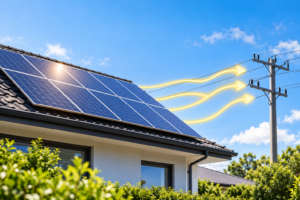
Solar curtailment occurs when your solar panels could generate more electricity than the electricity grid allows. Essentially, your system’s output is intentionally reduced to prevent network issues.
Even if the sun is shining brightly, some energy may not be used or exported — this is normal and necessary.
Example: Imagine your solar system is like a tap. Even if the water pressure (sunlight) is high, the tap only lets out a limited amount of water (electricity). The rest stays unused — that’s curtailment in action.
⚡ Why Does Solar Curtailment Happen?
Understanding the reasons behind curtailment is key to managing your solar system efficiently. The main causes include:
1. Grid Stability and Voltage Management
Australia’s electricity grid was designed for one-way electricity flow from large power stations to homes. Now, with thousands of rooftop solar systems, energy flows both ways, creating voltage fluctuations.
Curtailment helps balance electricity supply, protect your appliances, and ensure safety for the entire network.
2. Network Capacity Limits
Local distribution networks have limited capacity. If too many homes in your area generate solar power simultaneously, the network may overload, causing technical issues. Curtailment prevents this, ensuring a reliable power supply for all.
3. Low Demand vs. High Solar Output
On bright sunny days, homes may produce more solar energy than they consume. If the grid cannot absorb the excess, operators reduce solar exports. This ensures electricity prices remain stable and prevents energy waste.
4. Market and Tariff Considerations
Sometimes, exporting solar power can be less profitable due to low wholesale electricity prices. Curtailment can occur to avoid financial losses for electricity providers.
📉 How Solar Curtailment Affects Your Home Solar System
- Reduced Export Earnings: Some homes may see a slight decrease in feed-in tariff income.
- Lost Solar Energy: Energy your system could have produced but didn’t is “lost” if it’s not stored or used immediately.
- Self-Consumption Becomes Key: Using solar power directly at home reduces the impact of curtailment.
💡 How to Reduce Solar Curtailment and Maximise Savings
While you cannot completely avoid curtailment, you can minimise its impact with these strategies:
1. Increase Self-Consumption
The more electricity you use during the day, the less your excess solar energy is wasted.
- Run appliances like dishwashers, washing machines, or pool pumps when the sun is shining
- Charge electric vehicles (EVs) with solar power
- Pre-heat or cool your home using solar energy
2. Install a Solar Battery
A solar battery stores surplus electricity for use later, instead of exporting it to the grid. Benefits include:
- Higher self-consumption rates
- Reduced impact of curtailment
- Energy availability during peak demand or outages
3. Use Smart Energy Management
Smart solar systems or energy management apps can automatically shift household energy use to match solar generation, ensuring more energy is consumed on-site and less is curtailed.
🌏 The Future of Solar Curtailment in Australia
With more homes adopting solar:
- Grid Upgrades: Improved infrastructure will allow more homes to export without curtailment.
- Virtual Power Plants (VPPs): Coordinated home batteries can help stabilise the grid and reduce curtailment events.
- Advanced Forecasting: Predictive analytics can optimise when solar energy is exported or stored, minimising waste.
✅ Key Takeaways
- Solar curtailment is normal and ensures grid safety and reliability.
- Self-consumption, solar batteries, and smart energy management are effective ways to reduce its impact.
- Understanding curtailment helps homeowners maximize savings from rooftop solar systems.
By focusing on these strategies, you can ensure your solar panels deliver maximum financial and environmental benefit.
🔑 High-Intent Keywords Optimised
- solar curtailment
- reduce solar curtailment
- solar battery storage
- self-consumption
- rooftop solar system
- grid stability Australia
- solar energy savings
📖 FAQs About Solar Curtailment
Q1: Is solar curtailment harmful to my system?
No. It does not damage your panels; it simply limits output to protect the grid.
Q2: How can I know if my solar system is being curtailed?
Most modern inverters and monitoring apps show real-time solar output and indicate if energy is being curtailed.
Q3: Will adding a battery eliminate curtailment?
A battery doesn’t eliminate curtailment but reduces energy wastage by storing excess solar for later use.
Q4: Can I avoid curtailment completely?
Not entirely — it’s a grid-level control, but using your solar energy wisely and adding storage minimizes its impact.