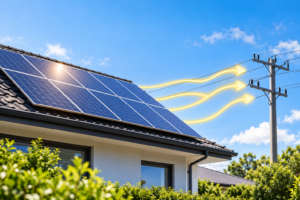

Solar panels on your roof can generate plenty of electricity during the day, but at night or on cloudy days, that power isn’t being made. That’s where a home solar battery becomes a smart addition to your solar system — storing excess solar energy so your home can use it when the sun isn’t shining.
Here’s how solar batteries work, how they integrate with rooftop solar systems, and why they’re a valuable investment for many Australian households.
☀️ Solar Batteries — The Basics
A solar battery system stores energy from your solar panels that isn’t immediately used in your home. This stored energy can then power your appliances after dark or during cloudy weather, reducing your reliance on grid electricity and lowering your energy bills.
In simple terms:
1. Solar panels create electricity (DC) from sunlight.
2. Inverter(s) convert this DC into AC for use in your home.
3. Battery storage gets charged with surplus solar electricity.
4. At night or when solar isn’t producing, the battery powers your home.
5. If the battery runs low, your home draws electricity from the grid.
Think of the battery as a home energy reservoir — storing daytime solar electricity so you can use it later.
🔌 Step-by-Step: How It Works During a Typical Day
👉 Daytime — Generation & Storage
1. Solar production: Your solar panels generate electricity when sunlight is available.
2. Load supply: Solar power first supplies real-time household energy needs (lights, appliances, air con).
3. Battery charging: If your home doesn’t use all the solar electricity, the excess flows into your battery, charging it.
4. Grid export (optional): Once the battery is full, any leftover solar can be exported to the grid — in many areas qualifying for a feed-in tariff.
🌙 Nighttime — Discharge & Savings
1. Battery discharge: After sundown, your home uses the energy stored in the battery rather than buying electricity from the grid.
2. Grid backup: If the stored energy is depleted, your system automatically switches to drawing from the grid.
3. Smart scheduling: Many setups allow your installer to configure when and how your battery discharges — for instance, to avoid peak tariff periods.
This mode of operation maximises self-consumption by using home-generated solar energy instead of paying for expensive grid electricity, especially overnight.
📊 What Components Make It Work?
Here’s a look inside your solar battery system:
⚡ Solar Panels
Capture sunlight and create electricity. This energy goes to your home or battery first, before any export or grid use.
🔄 Inverter(s)
Most systems use:
· Solar inverter – converts DC from panels to AC for household use.
· Battery inverter – converts DC to AC from the battery when needed. Some hybrid inverters handle both functions in one unit.
🔋 Battery Storage Unit
Stores excess solar electricity for later use. Modern solar batteries mostly use lithium-ion technology, known for efficiency and longevity.
📊 Battery Management System (BMS)
A smart controller that ensures the battery charges and discharges safely, protects against overcharging, and helps extend battery life.
🌦️ Charging from Solar and the Grid
While most solar batteries are designed to charge from your solar panels, some systems can also charge from the grid — especially during off-peak times when electricity is cheaper.
This can be useful if:
· Your solar panels don’t generate enough power on certain days
· You’re on a Time-of-Use tariff and want to charge at cheap rates
· You want backup readiness for extended cloud cover
📉 Real-World Benefits of Solar Batteries
💡 Reduced Grid Dependence
Buildings with batteries use more of their own solar energy and less expensive grid power — particularly after dark.
🪙 Lower Electricity Bills
By storing energy while solar is available and using it during expensive peak periods, you can significantly reduce your power bills.
🔋 Backup Power Options
Many batteries can be configured to provide limited backup power during outages (with appropriate hardware and inverter settings) — offering peace of mind during blackouts.
📈 Increased Solar Value
Instead of exporting nearly all excess solar to the grid at low feed-in tariff rates, batteries let you keep and use more energy on site — often capturing greater financial value.
🛠️ Battery Life, Capacity & Performance
📏 Capacity
Measured in kilowatt-hours (kWh), battery capacity determines how much energy you can store. Bigger batteries can power more appliances or cover longer periods without solar generation.
🔄 Battery Cycles & Lifespan
Solar batteries gradually wear down with each charge and discharge (called cycles). Most home batteries last around 10 years with proper use and battery management settings.
⚙️ Depth of Discharge (DoD)
This figure tells you how much of the battery’s total capacity can be used safely — for instance, a 10 kWh battery with a 90 % DoD can reliably deliver about 9 kWh before recharging.
📌 FAQs — Home Solar Batteries
Q: Can I use a battery without solar panels? Yes — some systems can charge from the grid, but pairing with solar is the most cost-effective approach for saving on power bills.
Q: Will a battery work during a blackout? Some batteries can provide backup power if the system is configured for it and the inverter supports it. Check your installer’s configuration.
Q: Do batteries reduce solar feed-in exports? Yes — because stored solar is used at home first, less energy is exported to the grid. This is often desirable if grid feed-in tariffs are low compared with savings from self-consumption.
Q: How long do solar batteries last? Most modern solar batteries offer a useful life of around 10 years or more, depending on usage and technology.
🧠 Conclusion — How Solar Batteries Power Your Home
Home solar batteries work by capturing the surplus solar energy your panels produce during the day and storing it for later use — especially at night, on cloudy days, or during
peak usage periods. They integrate with your solar system via inverters and smart controllers to optimise your self-consumption, boost energy independence, and help reduce electricity bills.
Whether your goal is to cut energy costs, reduce grid reliance, or gain backup power security, adding a solar battery can unlock the full potential of your solar installation.
Solar Authority can help assess the right battery size, configuration, and setup for your home — contact us for a personalised solar battery plan!