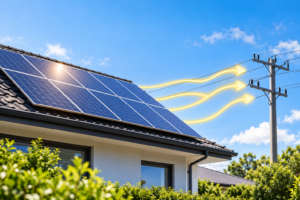

When you install solar panels on your home or business, you’re not just generating clean energy — you can also get credit for any surplus electricity you send back to the grid.
This is made possible through a system called net metering, and it’s one of the smartest ways to maximise your solar savings.
At Solar Authority, we explain how net metering works in Australia, how it affects your energy bill, and why it’s a powerful benefit of being connected to the grid.
📊 What Is Net Metering?
Net metering is a billing arrangement that lets you measure your electricity on a net basis — that is, the difference between what your solar system exports to the grid and what you import from the grid.
With net metering: ✔ You use as much solar power as you generate ✔ Any excess energy goes back into the grid and earns credits ✔ You pay only for the net energy you import — the difference between electricity consumed and solar energy exported
In Australia, net metering typically works with a bi-directional meter that records both the electricity sent into and taken from the grid.
🔄 How Net Metering Works (Step by Step)
☀ 1. Solar Power First, Grid Second
When the sun is shining, your solar panels generate power. The system uses this energy in your home first — meaning you reduce how much grid electricity you need.
🔌 2. Surplus Solar Goes to the Grid
If your panels produce more electricity than your home needs at that moment, the extra energy is sent to the grid, and your net meter records it as an export.
⚡ 3. You Import When Needed
When your panels aren’t producing enough (like at night), you draw power from the grid. The net meter records this as energy imported.
📉 4. Your Bill Is Based on “Net” Energy
At billing time, your electricity retailer calculates: Total electricity you imported – total solar energy you exported = net energy you pay for And any exported electricity earns feed-in tariff credits.
💰 What Are Feed-In Tariffs?
When you export excess solar energy to the grid, your retailer will typically credit you with a feed-in tariff (FiT) — a payment per kilowatt-hour (kWh) of electricity you send back.
Feed-in tariff rates in Australia vary by state and energy retailer and aren’t always equal to the retail electricity price — but they still help reduce your electricity bill over time.
📊 Net Metering vs Gross Metering (Quick Comparison)
Net metering:
· Measures import and export separately
· You use solar power in your home first
· You only get paid for the excess you export
Gross metering:
· Measures all solar generation separately from consumption
· You’re paid for every kWh your system produces, whether you use it or not
· Less common today, and often less financially beneficial unless tariffs are very high
In most modern Australian installations, net metering (feed-in tariff arrangements) is the norm — encouraging you to maximise your own solar consumption before exporting.
🏡 Why Net Metering Matters for Your Savings
Net metering maximises the value of your solar system because:
· Your solar energy offsets your grid usage first, reducing your power bill
· You earn credits for energy you don’t use right away
· You only pay for the net amount of electricity you import after exports are credited
For many Australian households, net metering combined with solar self-consumption can significantly cut annual electricity costs and shorten the payback period of a solar installation.
📍 State-By-State Considerations
Net metering and feed-in tariff rates vary across Australian states and retailers. Some states include the cost of net meter installation in your solar install, while others may require an upgrade for solar export capability.
Your Solar Authority consultant will explain: ✔ What feed-in rates you could receive ✔ How your net metering setup works with your energy retailer ✔ Whether meter upgrades are needed
⚡ Tips to Maximise Your Net Metering Benefits
To get the most value from net metering: ✔ Use more of your solar generation onsite (e.g., shift loads to daytime) ✔ Consider home battery storage to use excess solar later ✔ Choose a retailer plan with competitive feed-in rates ✔ Optimise your system size for your annual usage patterns
📌 Net Metering FAQs
Do you need net metering for solar? If you’re grid-connected and want credits for exported solar energy, yes — a net meter or smart bi-directional meter is essential.
Does net metering mean the grid stores your energy? Essentially yes — exported energy is credited back against your imported energy over the bill period.
Is net metering available everywhere in Australia? The concept exists nationwide, but rules, feed-in rates and meter requirements vary by state and retailer.
Get More from Your Solar With Solar Authority
Net metering is an important financial benefit of solar power — and at Solar Authority, we help you make the most of it by: ✔ Designing your system for high self-consumption ✔ Helping set up the right meter and export arrangement ✔ Advising on feed-in tariff options for your area
Contact us today for a free solar consultation and start maximizing your solar energy savings with smart net metering.