
🌞 1. Solar Panels Use the Photovoltaic (PV) Effect
Solar panels are made up of many photovoltaic (PV) cells, usually made from high-purity silicon. When sunlight — made of tiny particles called photons — hits these cells:
· Photons are absorbed into the silicon material
· Electrons within the silicon are knocked loose
· This movement of electrons creates an electric current This process of converting sunlight directly into electricity is called the photovoltaic effect.
⚡ 2. Panels Produce Direct Current (DC) Electricity
The electricity generated by solar panels is direct current (DC) — meaning electrons flow in a single direction. This is the natural output of PV cells, and why solar panels inherently generate DC power.
However, Australian homes and the electricity grid operate on alternating current (AC), where the direction of electrons regularly switches back and forth. That’s where the inverter comes in next.
🔄 3. Solar Inverters Convert DC into AC Power
The inverter is what makes solar energy usable in your home. It takes the DC power from the solar panels and converts it into AC electricity — the standard used by:
· Lights and appliances
· Air conditioners and refrigerators
· The national electricity grid
Modern inverters also optimise performance based on sunlight and panel conditions to get the most out of your system.
🏠 4. How Solar Electricity Is Used in Your Home
Once your solar energy is converted to AC:
· It powers your appliances and lights instantly
· Any extra electricity not used right away can be:
o Stored in a solar battery for use at night or during cloudy days
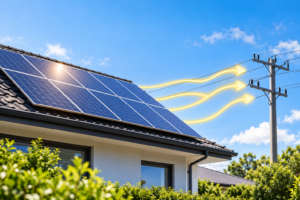
o Exported to the grid for credits or feed-in tariffs This flexible flow of energy helps maximise your savings and energy independence.
☁️ 5. Solar Works Even When It’s Not Perfectly Sunny
Solar panels don’t need direct sunshine to produce power — they can also generate electricity from diffuse light on cloudy days. While output is highest in bright conditions, the system still works even under partial cloud cover.
📦 6. What a Full Solar PV System Includes
A typical rooftop solar setup in Australia contains:
· Solar panels (PV modules): Capture sunlight and generate DC electricity
· Inverter: Converts DC into AC power for home use
· Mounting & safety equipment: Secures panels and ensures safe operation
· Optional battery: Stores excess energy for later use Together, these components create a system that can significantly reduce grid electricity purchases and power bills.
🌏 Why Solar Is Especially Great in Australia
Australia boasts one of the highest rates of solar uptake in the world thanks to:
· High average sunlight hours
· Competitive solar system costs
· Generous rebates and incentives
· Feed-in tariffs for exported solar energy All of this makes solar a compelling choice for cost savings and environmental impact.
🧠 Frequently Asked Questions
Q: Do solar panels need heat to work? No — they need sunlight. In fact, solar panels can be less efficient at very high temperatures, so bright but cool conditions are ideal.
Q: What happens to excess solar energy I don’t use? Excess solar electricity can either be stored in a battery for later or exported back to the grid, often earning you feed-in credits.
Q: Can solar panels work at night? No — solar panels only generate electricity in daylight. That’s why many households pair their system with a battery or rely on grid power at night.
⚡ Ready to Power Your Home with Solar?
At Solar Authority, we design solar systems that match your lifestyle, roof orientation, energy needs, and budget — helping you get the most from every ray of sunshine.
Contact us today for a personalised solar quote and free site assessment — and start saving with smart solar power.