🌞 Why Solar Rebates Matter in SA
South Australia (SA) is one of Australia’s sunniest states, making solar installation highly attractive for homeowners and small businesses. However, upfront costs can be a barrier. To make solar more affordable, government rebates and incentives are available—especially through the federal Small-scale Renewable Energy Scheme (SRES) and other supportive programs.
🏆 Federal Government Solar Rebate (STC-Based Subsidy)
The primary rebate available in SA is the Small-scale Renewable Energy Scheme (SRES) rebate. Under this Australian Government program:
When you install an eligible rooftop solar system, you earn Small-scale Technology Certificates (STCs).
Each STC has a monetary value and is usually claimed by your solar installer to give you an instant discount at point of sale.
📊 How STC Rebates Work
The number of STCs you receive depends on:
System size (e.g., 6.6 kW, 10 kW)
Location (SA is typically in STC Zone 3)
Estimated electricity generation until the year 2030.
Higher generation = more STCs = greater rebate.
The rebate decreases annually and the scheme is scheduled to end in 2030.
📈 Example Savings in SA
A typical 6.6 kW system in SA could receive around $3,700 in federal rebate savings (example figure based on STC value and zone) — significantly reducing the net cost of installation.
🔋 Battery Rebates and Home Energy Incentives
South Australians installing solar with a battery may also benefit from additional incentives:
🏡 Home Battery Rebate (Federal)
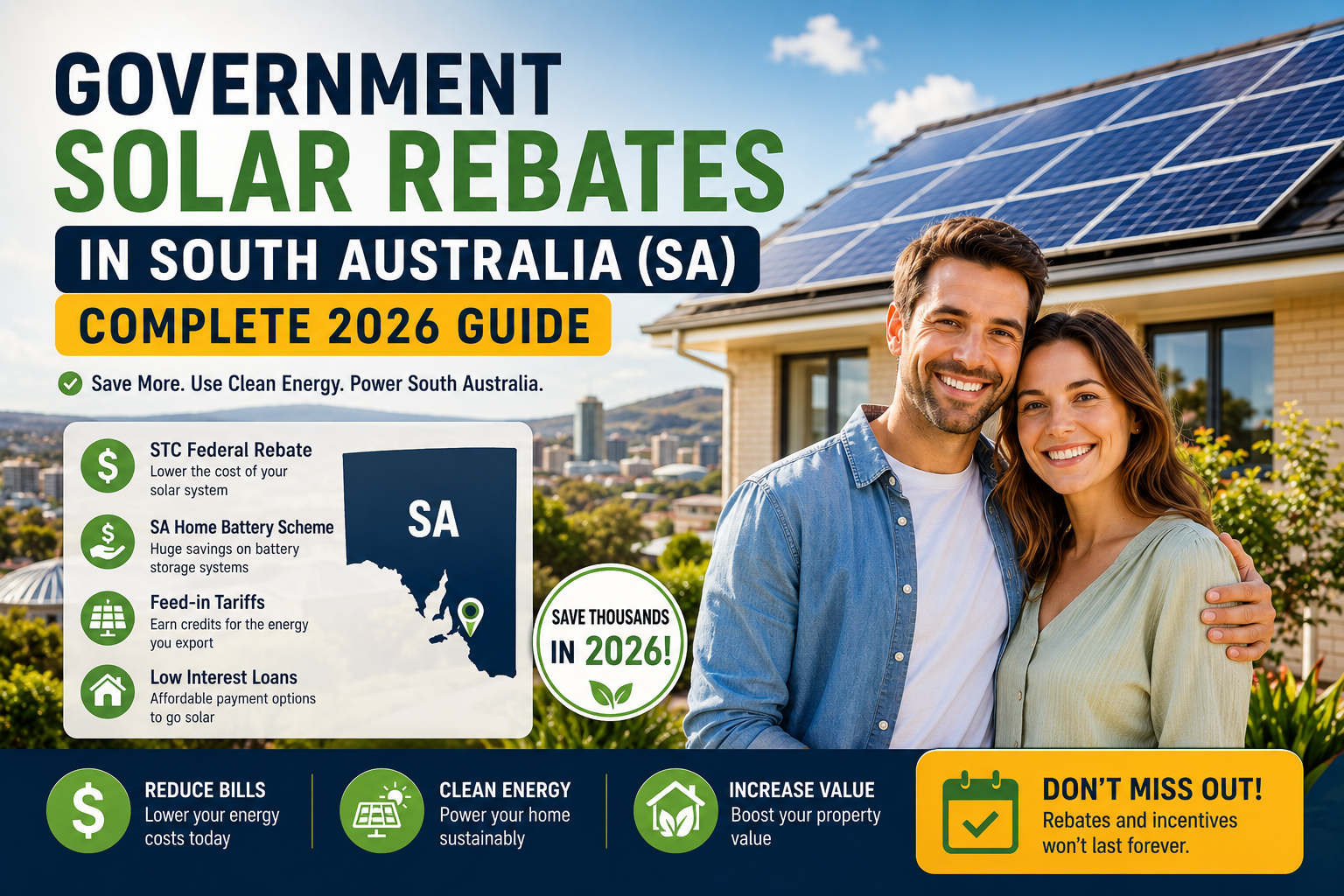
From 1 July 2025, a federal home battery rebate under the Cheaper Home Batteries Program offers around 30% off the upfront cost of battery installations (via SRES-linked discounts at installer level).
The exact rebate depends on battery capacity and eligibility criteria.
📌 SA Home Battery Scheme (State-level)
In addition to federal rebates, SA has supported battery uptake with state battery rebates (e.g., up to $2,000 total in past schemes), offering about $150 per kWh of battery storage for qualifying installations.
🔌 Feed-in Tariffs — Extra Monthly Income
Another worthwhile incentive in SA is the solar feed-in tariff:
When your system exports excess energy to the grid, you earn a credit per kWh.
Typical feed-in rates in SA range broadly but can offer additional savings against your electricity bill.
🗓 Rebate Outlook — Act Sooner Than Later
The federal solar rebate gradually reduces each year until the SRES ends in 2030. That means the sooner you install your system, the higher the rebate value you can access.
🔍 Key Eligibility Tips
To ensure you secure rebates and incentives:
Install systems through a Clean Energy Council (CEC) accredited installer.
Use approved solar panels, inverters, and batteries.
Stay informed on any state or council solar incentive programs that may stack with federal rebates.
📈 Final Takeaway
In South Australia, government solar rebates significantly reduce the cost of solar installations—making solar energy a smart investment:
✅ Federal STC solar rebates lower upfront costs
✅ New battery incentives cut battery prices
✅ Feed-in tariffs add ongoing value
✅ Rebates are decreasing — installation sooner gives better value
By combining these incentives with smart system design and certified installation, SA homeowners can maximise savings and energy independence.