Considering a Sigenergy battery for your home in Australia?
Before buying a battery, it’s worth looking beyond the product specifications and understanding who actually makes the system.
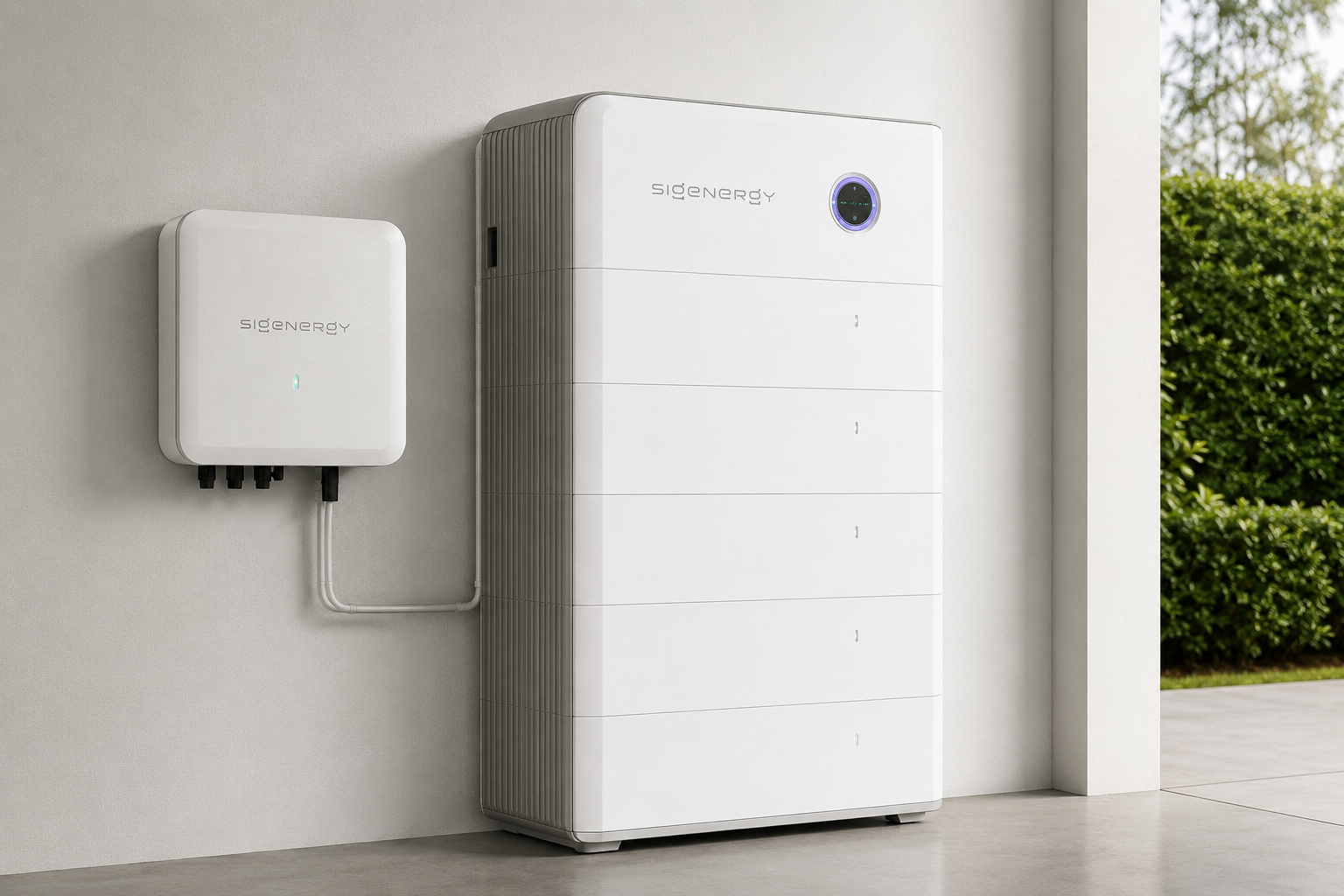
Sigenergy has attracted significant attention in the Australian solar market through its SigenStor energy storage platform, which combines battery storage, inverter technology, energy management and EV charging into a modular system.
But Sigenergy is also a relatively young company compared with established solar manufacturers.
So the important questions are:
Who owns Sigenergy? Where is Sigenergy based? How long has the company been operating? Who manufactures SigenStor? How popular is Sigenergy in Australia? What is its technology like? And what should Australian homeowners consider before choosing a newer battery manufacturer?
This Australian-focused guide looks at Sigenergy’s background, products, technology, market position, warranty, support and what the company’s history means for Australian battery buyers in 2026.
Looking for a Sigenergy Battery Quote?
Compare the complete SigenStor system, not just the battery capacity.
👉 Get a Free Sigenergy Battery Quote
Who Is Sigenergy?
Sigenergy Technology Co., Ltd. is an energy technology company focused on developing integrated energy storage and management solutions.
The company was established in 2022 and is headquartered in Shanghai, China.
Sigenergy focuses on technologies including:
- Battery energy storage
- Hybrid inverters
- Energy management systems
- Solar integration
- EV charging
- Energy management software
- Residential and commercial energy solutions
Its flagship product is the SigenStor platform.
Unlike a traditional battery manufacturer that primarily supplies battery modules, Sigenergy’s strategy is to develop a broader integrated home energy ecosystem.
This includes:
Solar + Battery + Inverter + Energy Management + EV
That integrated approach is one of the company’s biggest points of differentiation.
What Does Sigenergy Manufacture?
Sigenergy’s product portfolio extends beyond batteries.
The company’s technology ecosystem includes:
Battery Storage
SigenStor battery modules provide modular energy storage that can be configured according to the property’s energy requirements.
Hybrid Inverters
The system can integrate power conversion and inverter functionality into the wider SigenStor architecture.
Energy Management
Sigenergy provides energy management technology designed to coordinate solar generation, battery storage, household consumption and grid interaction.
EV Charging
SigenStor can be configured with EV charging technology, allowing the battery and EV to become part of the same home energy ecosystem.
Backup Power
Depending on the configuration, the system can provide backup power during grid outages.
This makes Sigenergy different from companies that sell a battery as a standalone product.
What Is the Sigenergy SigenStor?
SigenStor is Sigenergy’s integrated energy storage platform.
The system is designed around a modular architecture where different components work together.
Depending on the configuration, SigenStor can combine:
Battery + Hybrid Inverter + Energy Management + Backup + EV Charging
This approach is intended to reduce the number of separate major systems required in a modern home energy installation.
For example, a conventional installation may involve:
Solar Panels → Inverter → Battery → Energy Management → EV Charger
An integrated SigenStor configuration can bring many of these functions together.
What Makes Sigenergy Different?
The biggest difference is the company’s focus on an all-in-one energy architecture.
Traditional solar systems have historically been built by combining equipment from different manufacturers.
For example:
Solar Panels
↓
Hybrid Inverter
↓
Battery
↓
EV Charger
↓
Energy Management
Sigenergy instead aims to coordinate these functions within a single ecosystem.
This can potentially provide:
- Simplified system architecture
- Better component integration
- Centralised monitoring
- Smart energy management
- Battery expansion
- EV integration
- Backup functionality
- Future energy flexibility
For homeowners planning an EV or additional energy upgrades, this can be particularly attractive.
When Was Sigenergy Founded?
Sigenergy was founded in 2022.
This is an important consideration when comparing the company with long-established solar and battery manufacturers.
The company’s relatively young age has two sides.
Potential advantage
Sigenergy has been able to build its products around modern technologies rather than adapting older architectures.
This has allowed it to focus heavily on:
- Modular design
- Integrated systems
- AI-enabled energy management
- EV integration
- Smart energy control
Potential disadvantage
The company has a shorter long-term track record than manufacturers that have supplied batteries and solar equipment for decades.
This means there is naturally less 20-year field history available for homeowners to assess.
The key question is:
“How comfortable am I choosing a relatively young manufacturer for a product I expect to operate for 10+ years?”
Is Sigenergy a Chinese Company?
Yes.
Sigenergy Technology Co., Ltd. is headquartered in Shanghai, China.
The company operates internationally and has expanded its presence across global energy markets.
For Australian homeowners, the country of origin should not be the only factor used to judge a battery.
More important considerations include:
- Product certification
- Australian compliance
- Installer experience
- Warranty terms
- Local support
- Spare parts availability
- Software support
- Long-term manufacturer commitment
- Actual product performance
Australia’s solar market includes many major Chinese manufacturers, alongside companies headquartered in Europe, the United States, South Korea and elsewhere.
The relevant question is therefore:
“Does this specific product meet Australian requirements and have reliable support in Australia?”
How Quickly Has Sigenergy Grown?
Sigenergy has expanded rapidly since its launch.
Its integrated SigenStor architecture has attracted significant interest from installers and homeowners looking for a more sophisticated alternative to conventional battery systems.
The company’s growth is particularly notable because it entered a market already occupied by established brands such as:
- Tesla
- Sungrow
- BYD
- GoodWe
- Fronius
- SMA
Rather than competing solely on battery capacity or price, Sigenergy has positioned itself around system integration and energy management.
Is Sigenergy Popular in Australia?
Sigenergy has achieved strong adoption in Australia’s residential battery market.
Its rapid installer adoption demonstrates that the product has moved beyond being an obscure new entrant.
However, market-share rankings can change quickly as battery installations increase and different manufacturers expand their distribution networks.
Therefore, rather than relying solely on a claim such as “Australia’s No. 1 battery”, homeowners should evaluate the complete product and support ecosystem.
Look at:
Market adoption → Installer experience → Warranty → Support → Product performance → Price → Long-term value
Market share is useful context, but it shouldn’t be the only reason to buy a battery.
What Is Sigenergy Best Known For?
Sigenergy’s strongest differentiator is its integrated energy platform.
The company focuses heavily on combining:
Battery Storage
Inverter Technology
Energy Management
Solar
EV Charging
Backup Power
This is different from simply manufacturing a battery module.
The objective is to create an integrated energy system capable of managing electricity throughout the property.
Sigenergy Battery Technology
SigenStor uses Lithium Iron Phosphate (LiFePO₄/LFP) battery technology.
LFP is widely used in modern stationary energy storage because of characteristics including:
- Thermal stability
- Strong safety characteristics
- Long cycle-life potential
- Suitability for stationary applications
However, battery chemistry alone doesn’t determine whether a system is safe or reliable.
The complete system matters.
This includes:
- Battery management system
- Inverter
- Electrical protection
- Installation
- Thermal management
- Software
- Monitoring
- Operating environment
Ask your installer:
“What safety and protection features are included in the complete SigenStor installation?”
How Does Sigenergy’s Modular Design Work?
SigenStor is designed around modular components.
This means the system can be configured according to the property’s energy requirements rather than forcing every homeowner into a single battery size.
You may be able to configure the system around:
- Current electricity consumption
- Solar generation
- Evening usage
- EV charging
- Backup requirements
- Future energy demand
This can be particularly useful for households whose energy consumption is expected to increase.
For example:
Today: Solar + Battery
Later: Solar + Battery + EV
Future: Larger Battery + EV + Backup
The ability to build around changing energy requirements is one of Sigenergy’s strongest selling points.
Sigenergy and EV Charging
EV integration is one of the areas where Sigenergy has positioned itself differently from traditional battery manufacturers.
A modern household may have:
Solar → Home → Battery → EV → Grid
Instead of treating these as separate systems, Sigenergy aims to coordinate them through the same energy management ecosystem.
This can potentially help homeowners:
- Use excess solar to charge an EV
- Manage battery charging
- Optimise household energy
- Reduce grid purchases
- Coordinate energy consumption
If you’re planning an EV:
“Can the exact SigenStor configuration I’m buying integrate with my current or future EV?”
Also confirm exactly which EV charger is included in your quotation.
Sigenergy Energy Management System
Energy management is an important part of the Sigenergy proposition.
The system is designed to monitor and coordinate energy flows between:
Solar → Home → Battery → EV → Grid
This can potentially help optimise:
- Solar self-consumption
- Battery charging
- Battery discharge
- Grid imports
- Grid exports
- EV charging
- Backup reserves
The objective isn’t simply to store electricity.
It’s to manage when and where electricity is used.
This becomes increasingly important as households adopt:
- Solar
- Batteries
- EVs
- Heat pumps
- Pool equipment
- Smart appliances
Does Sigenergy Provide Backup Power?
Depending on the system configuration, SigenStor can provide backup power during grid outages.
However, purchasing a Sigenergy battery does not automatically mean your entire house will operate normally during a blackout.
Backup capability depends on:
- Battery capacity
- Inverter capacity
- Backup configuration
- Electrical switchboard
- Essential loads
- Household demand
- System design
Ask:
“Exactly which circuits and appliances will remain operational during a blackout?”
This is much more useful than simply asking whether the battery has backup.
Is Sigenergy Suitable for Australian Conditions?
SigenStor systems are designed for outdoor energy storage applications and relevant components/configurations provide environmental protection suitable for outdoor installation.
However, Australian conditions can vary dramatically.
A Brisbane installation may experience:
- High summer temperatures
- Humidity
- Heavy rain
- Storm activity
A regional or remote installation may face:
- Dust
- Extreme heat
- Limited service access
The installation location therefore matters.
Your installer should consider:
- Direct sunlight
- Heat exposure
- Rain
- Ventilation
- Flood risk
- Clearance
- Accessibility
- Local environmental conditions
Ask:
“Why is this location suitable for my Sigenergy system?”
Sigenergy Monitoring and Software
Sigenergy places considerable emphasis on software and intelligent energy management.
Homeowners can monitor aspects of their system such as:
- Solar generation
- Household consumption
- Battery state
- Battery charging
- Battery discharge
- Grid imports
- Grid exports
- EV charging
- System status
For an integrated energy system, software is more important than it might initially appear.
A sophisticated battery can provide significantly more value when homeowners can clearly understand how energy is moving through their property.
Sigenergy Warranty
Sigenergy provides warranty coverage for its products, but homeowners should check the exact warranty document for the specific model and configuration.
Don’t compare batteries simply by asking:
“Does it have a 10-year warranty?”
Instead, check:
Battery warranty
How long is the battery covered?
Capacity guarantee
How much usable capacity is guaranteed at the end of the warranty?
Throughput
Is there a maximum energy throughput or cycle condition?
Inverter warranty
What warranty applies to the inverter?
EV charger
What warranty applies if EV charging equipment is included?
Labour
Who pays labour if a component needs replacement?
Transport
Who is responsible for removing and returning defective equipment?
Support
Who actually manages the warranty claim?
These details can make a significant difference over a 10-year ownership period.
Does Sigenergy Have a Long Australian Track Record?
This is one of the most important considerations.
Sigenergy was established in 2022, meaning it does not have the same decades-long history as some established energy technology manufacturers.
That doesn’t mean the technology is unreliable.
It simply means there is less long-term field data available.
For a product expected to operate for approximately a decade or longer, this is worth considering.
Compare:
Innovation
versus
Long-term track record
Neither is automatically better.
The right choice depends on your priorities.
What Does Sigenergy’s Young Age Mean for Buyers?
A newer manufacturer can create two competing considerations.
Potential Benefits
✔ Modern system architecture
✔ Rapid product development
✔ Strong focus on smart energy management
✔ EV integration
✔ Modular design
✔ Modern software
Potential Risks
✘ Less long-term Australian operating history
✘ Less historical warranty data
✘ Less long-term degradation information
✘ Future product support must be considered
✘ Installer quality becomes especially important
This doesn’t mean you should avoid Sigenergy.
It means you should perform more detailed due diligence before buying.
How Important Is the Installer?
With an integrated energy platform, the installer can be almost as important as the hardware.
The installer needs to understand:
- Solar design
- Battery sizing
- Inverter configuration
- Backup power
- Switchboards
- Electrical protection
- EV charging
- Energy management
- Australian compliance
- Battery commissioning
A technically advanced system can still perform poorly if it is incorrectly sized or configured.
Ask your installer:
“How many Sigenergy systems have you installed, and who will provide support if I have a problem?”
Sigenergy Support in Australia
Manufacturer support is only one part of the ownership experience.
Your first point of contact will often be the installer or retailer.
This means you should investigate:
- Installer reputation
- Local technical support
- Warranty claim process
- Spare parts
- Response times
- Product commissioning
- Software support
- Manufacturer escalation process
A strong manufacturer with a weak installer can still create a poor customer experience.
Likewise, an experienced installer can make ownership much easier.
Sigenergy Battery Price in Australia
Sigenergy is generally positioned toward the premium end of the residential energy storage market.
However, there isn’t one standard price for every SigenStor installation.
The final price depends on:
- Battery capacity
- Inverter configuration
- EV charger
- Backup requirements
- Solar system
- Existing equipment
- Switchboard work
- Installation complexity
- Additional electrical work
- Applicable incentives
Don’t compare:
Battery price only
Instead compare:
Complete installed system price
This is particularly important with an all-in-one platform because several functions may already be integrated into the system.
Does Sigenergy Qualify for Australian Battery Incentives?
Eligibility depends on the specific product, configuration, installation and current government requirements.
Australian battery incentives can change over time.
For eligible systems under the federal Cheaper Home Batteries Program, the battery and installation must satisfy the applicable program requirements.
Ask:
“Is this exact Sigenergy configuration eligible for the current battery incentive, and how much has been included in my quote?”
Don’t assume every model or configuration receives the same incentive.
Sigenergy vs Established Battery Brands
When comparing Sigenergy with brands such as BYD, Sungrow, Tesla, GoodWe or other established manufacturers, look beyond battery capacity.
Compare:
| Factor | What to Compare |
|---|---|
| Company history | How long has the manufacturer operated? |
| Australian history | How long has the product been sold locally? |
| Battery chemistry | LFP or other chemistry |
| Usable capacity | Actual usable energy |
| Inverter | Integrated or separate |
| Backup | Essential loads or whole-home |
| EV integration | Available or not |
| Scalability | Future expansion |
| Monitoring | App and software |
| Warranty | Years + capacity + throughput |
| Support | Australian service arrangements |
| Price | Complete installed cost |
| Incentives | Eligible government support |
This creates a much more meaningful comparison than simply asking which battery has more kWh.
Sigenergy Pros and Cons as a Manufacturer
Sigenergy Pros
✔ Strong focus on integrated energy systems
✔ Modern battery + inverter architecture
✔ Strong emphasis on energy management
✔ EV charging integration
✔ Modular battery design
✔ Growing Australian installer adoption
✔ Modern software and monitoring
✔ LFP battery technology
✔ Designed around future energy requirements
Sigenergy Cons
✘ Company was only established in 2022
✘ Less long-term field history than legacy manufacturers
✘ Long-term Australian degradation data is more limited
✘ Sophisticated systems require experienced installers
✘ Support experience can depend heavily on the installer
✘ Premium positioning may not suit price-focused buyers
Who Is Sigenergy Best Suited To?
Sigenergy may be particularly attractive if you:
✅ Want an integrated solar + battery ecosystem
✅ Plan to purchase an EV
✅ Want smart energy management
✅ Want backup capability
✅ Expect your electricity consumption to increase
✅ Want modular battery expansion
✅ Prefer modern technology
✅ Want battery, inverter and energy management integrated
✅ Are willing to pay a premium for additional functionality
Who May Prefer Another Battery Brand?
Sigenergy may not be the ideal choice if:
⚠ Your main priority is the lowest upfront price
⚠ You prefer a manufacturer with decades of battery history
⚠ You only need basic solar battery storage
⚠ You don’t need EV integration
⚠ You don’t need advanced energy management
⚠ Your local installer has limited experience with Sigenergy
In these situations, an established or simpler battery platform may provide better value.
Is Sigenergy a Reliable Battery Manufacturer?
Sigenergy has quickly established itself as a serious player in the global and Australian energy storage market.
Its technology is modern, its product ecosystem is highly integrated and its Australian market adoption has grown rapidly.
However, it is important to separate:
“Promising and rapidly growing”
from
“Proven over multiple decades.”
Sigenergy does not yet have the same length of operating history as some established manufacturers.
For buyers, that means the decision should consider:
Technology + Market adoption + Warranty + Installer + Support + Price + Long-term risk
rather than relying solely on brand reputation.
Is Sigenergy Worth Buying in Australia?
For the right homeowner, Sigenergy can be a very compelling option.
Its biggest strength isn’t simply the battery.
It’s the broader energy ecosystem:
Solar → Battery → Home → EV → Grid
If you’re planning to combine solar storage, backup power, smart energy management and EV charging, Sigenergy’s integrated architecture can make considerable sense.
However, if you only want a straightforward battery to store excess solar, you should compare whether you’re actually going to use the additional functionality you’re paying for.
The key question is:
“Am I buying a battery — or am I building a complete home energy system?”
If you’re building the latter, Sigenergy becomes considerably more interesting.
12 Questions to Ask Before Buying a Sigenergy Battery
Before signing your contract, ask your installer:
- What exact SigenStor configuration am I getting?
- Who manufactures each major component?
- What is the total and usable battery capacity?
- What inverter capacity is included?
- Can I expand the battery later?
- What happens during a blackout?
- Which appliances will operate during backup?
- Can the system integrate with my current or future EV?
- What government incentives apply to this configuration?
- What exactly does the warranty guarantee?
- Who handles warranty claims in Australia?
- How many Sigenergy systems has the installer previously installed?
These questions can reveal important differences between two seemingly identical Sigenergy quotes.
Sigenergy Manufacturer — Final Verdict
Sigenergy is one of the more interesting new-generation energy technology companies in the Australian battery market.
Its SigenStor platform takes a fundamentally different approach from traditional battery systems by bringing together:
Battery + Inverter + Energy Management + Backup + EV
Its rapid growth demonstrates strong market interest, while its modern architecture makes it particularly attractive to homeowners building a future-focused energy system.
However, Sigenergy’s 2022 founding date means it doesn’t yet have the decades of field history associated with some established manufacturers.
That doesn’t make it a bad choice.
It simply means you should place greater emphasis on:
Warranty → Australian support → Installer experience → System design → Product compliance → Long-term service → Total installed price
The best battery isn’t necessarily the newest or the cheapest.
It’s the system that provides the right combination of performance, reliability, support and value for your home.
Get a Sigenergy Battery Quote
Considering a Sigenergy SigenStor system?
Don’t compare battery brands based on capacity or headline price alone.
Compare:
Battery → Usable Capacity → Inverter → Solar → EV → Backup → Energy Management → Warranty → Support → Installation → Rebate → Final Price
At Solar Authority, we can help you assess your:
- Electricity consumption
- Existing solar system
- Battery requirements
- Backup needs
- EV plans
- Future energy requirements
- Available incentives
Then compare whether Sigenergy is actually the right fit for your property.
Get a Free Sigenergy Battery Quote
Get a personalised system assessment and compare the complete installed solution.
Free to enquire. No obligation to proceed.