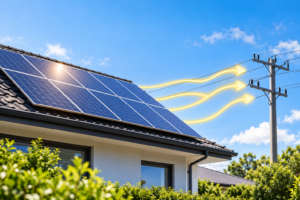

A solar feed‑in tariff (FiT) is a payment you receive when your home solar system exports excess electricity back into the electricity grid. It’s one way solar owners in Queensland can earn additional savings on top of reducing their power bills by using their own solar energy.
How Feed‑In Tariffs Work in Queensland
In Queensland, feed‑in tariffs are split into two main network areas:
1. South East Queensland (SEQ) In SEQ — which includes Brisbane, the Sunshine Coast, and Gold Coast — there is no regulated minimum feed‑in tariff. Instead, retailers set their own FiT rates as part of competitive electricity plans. That means rates vary widely and often depend on which retailer and plan you choose.
2. Regional Queensland (Ergon Network) For homes connected to the Ergon Energy network outside SEQ, the Queensland Competition Authority (QCA) sets a mandatory minimum feed‑in tariff each year. For
the 2025–26 financial year, this rate is approximately 8.66 ¢ per kWh for exported solar power.
What Feed‑In Tariffs Can You Expect in QLD
In South East Queensland: • Feed‑in tariffs vary by retailer and plan — commonly ranging from around 3 ¢ to 10 ¢ per kWh for residential customers. • Some plans offer higher FiT rates (e.g., ~10 ¢/kWh) for the first portion of exported electricity each day, then lower rates thereafter. • The best solar customers can potentially earn more by choosing plans that specifically target solar exports.
In Regional Queensland (Ergon): • The minimum required feed‑in tariff is 8.66 ¢/kWh (2025–26) — though this figure can change annually based on market conditions and QCA review. • This minimum ensures regional solar owners get a baseline payment even if retailers don’t offer additional incentives.
Legacy Solar Bonus Scheme (44 ¢/kWh)
Some Queensland solar owners may still be on the Solar Bonus Scheme, a legacy program that offered a premium 44 ¢ per kWh feed‑in tariff for eligible systems installed prior to 10 July 2012. This rate continues until 1 July 2028 for qualifying customers, but isn’t available to new solar installations.
Why Feed‑In Tariffs Matter (and How to Maximise Value)
Understanding FiTs is important because:
✔ Exported solar energy earns extra savings — you get credited for sending power back to the grid. ✔ Self‑consumption often pays more than FiT — using your own solar energy directly
can save you more than the export rate you receive. For example, if your solar replaces grid power that costs ~30 ¢/kWh, that’s greater value than export credits at ~8 ¢/kWh. ✔ Choosing the right retailer and plan matters — shopping around for solar‑friendly plans can boost your feed‑in earnings and overall bill savings.
To get the most from your solar system in Queensland: Compare feed‑in tariffs from different retailers. Use more of your solar energy at home (self‑consumption). Consider adding a battery to store energy for use when tariffs are low.
Tips When Choosing a Solar Feed‑In Plan in Queensland
Don’t focus solely on FiT rate — look at total plan cost (usage charges + supply charges + FiT). Check rate tiers — some plans pay higher rates for the first few kilowatt‑hours exported each day. Ask about solar conditions — some retailers require plan conditions like solar system registration or certain tariff types.
Conclusion – Solar Feed‑In Tariffs in QLD
In Queensland, your solar feed‑in earnings depend on where you live and which electricity plan you choose:
· South East Queensland: feed‑in tariffs are set by retailers and vary widely — compare plans to find the best rate for you.
· Regional Queensland: the Queensland Competition Authority sets a minimum feed‑in tariff (around 8.66 ¢/kWh for 2025–26).
· Legacy bonus schemes: some older solar systems still enjoy a 44 ¢/kWh Solar Bonus until 2028, but this is not open to new installations.
By understanding local policies, comparing retail offers, and prioritising self‑consumption, you can maximise the savings from your solar system in QLD — even with smaller feed‑in rates compared to past premium schemes.