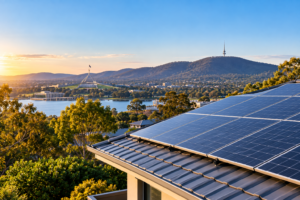

Thinking about installing solar panels in Australia?
The hardest part isn’t finding a solar company. It’s working out whether the system you’re being offered is actually a good deal.
Solar prices, government incentives, electricity tariffs, feed-in tariffs, batteries and equipment can all affect how quickly your system pays for itself.
This guide explains the most important things Australian homeowners need to know before buying solar, including:
- Solar panel and installation costs
- Australian solar rebates and STCs
- Solar battery rebates
- Feed-in tariffs
- Solar system sizing
- Solar payback periods
- Battery vs solar-only systems
- Electricity bill savings
- What affects solar performance
- How to compare solar quotes
- Questions to ask your installer
Quick answer: Solar can be an attractive way to reduce electricity purchases from the grid, but the value of a system depends on your electricity usage, roof, system size, installation price, self-consumption, feed-in tariff and available incentives. The cheapest solar system isn’t necessarily the one that produces the best long-term value.
Is Solar Energy Worth It in Australia in 2026?
For many Australian households, solar can make financial sense because rooftop solar allows you to generate electricity at home and reduce the amount of electricity you need to buy from the grid.
But there’s an important distinction:
Solar doesn’t make your electricity completely free.
Most grid-connected homes still:
- Pay daily supply charges
- Buy electricity from the grid when solar production is insufficient
- Export excess solar electricity
- Receive a feed-in tariff for eligible exports
- May use a battery to store some excess generation
The financial benefit therefore depends on how much solar electricity you use yourself and how much you export.
The Australian Government notes that new solar customers generally receive a feed-in tariff below the retail rate they pay when buying electricity, making self-consumption increasingly important.
That’s why the right question isn’t:
“How much solar can I put on my roof?”
It’s:
“How much solar should I install based on how much electricity I use and when I use it?”
How Does Solar Power Work?
A typical residential solar system works like this:
Solar panels → Inverter → Home
When your panels produce more electricity than your home needs:
Solar panels → Home + Grid export
If you have a battery:
Solar panels → Home + Battery
Then at night:
Battery → Home
If solar and battery energy aren’t sufficient:
Grid → Home
This simple energy flow explains why your electricity consumption pattern matters when choosing a solar system.
How Much Does Solar Cost in Australia?
There isn’t one national solar price.
The cost of installing solar varies depending on:
- System size
- Panel brand and model
- Inverter brand and model
- Roof type
- Installation complexity
- Location
- Switchboard requirements
- Electrical work
- Installer
- Battery inclusion
- Available incentives
- System design
A 6.6kW system installed on a simple single-storey roof can have a very different installed price from a larger system on a multi-storey property with a complicated roof.
Don’t compare solar using price alone.
Instead, compare:
System size + equipment + estimated generation + installation + warranty + total price
What Does a Solar Quote Actually Include?
A professional solar quote should clearly identify the major components of the system.
Look for:
Solar panels
- Brand
- Model
- Number of panels
- Total system capacity
Inverter
- Brand
- Model
- Capacity
- Number of MPPTs
- Battery compatibility
Installation
- Mounting system
- Electrical work
- Switchboard work
- Labour
- Commissioning
Financial information
- Gross price
- STC discount
- Other applicable incentives
- Final price payable
Performance information
- Estimated annual generation
- Expected system output
- Assumptions used in the estimate
If a quote simply says:
“10kW premium solar system — $X”
that’s not enough information to make a good buying decision.
Australian Solar Rebates: How Do They Work?
One of the biggest factors reducing the upfront cost of eligible small solar systems is the Small-scale Renewable Energy Scheme (SRES).
Eligible rooftop solar systems can create Small-scale Technology Certificates (STCs).
Most homeowners don’t personally trade the certificates.
Instead, a registered agent or solar retailer will commonly provide an upfront discount in exchange for the right to claim the STCs.
The value of the incentive depends on factors including:
- System capacity
- Location
- Installation date
- STC market value
- The applicable deeming period
The SRES is scheduled to continue through 2030, with the incentive reducing as the scheme approaches its end.
Important:
Don’t confuse STCs with a simple cash rebate paid directly into your bank account.
In many solar quotes, the STC benefit appears as an upfront discount on the purchase price.
How Much Is the Solar Rebate?
There isn’t one fixed national dollar amount.
The STC benefit depends on the characteristics of the installation.
The Clean Energy Regulator explains that eligible rooftop solar systems generally need to be under 100kW, meet annual output requirements, use approved products and be installed by appropriately accredited installers to qualify under the SRES.
This means you should ask:
“How many STCs are included in my quote, and what value has been applied to them?”
Don’t just compare the final price.
Compare the gross price and incentive separately.
Are Solar Rebates Ending?
The SRES is scheduled to end at the end of 2030.
The value of the STC incentive decreases over time as the deeming period reduces.
That doesn’t necessarily mean solar becomes uneconomical after 2030.
Solar equipment prices, electricity prices, system performance and installation costs can all change.
But it does mean homeowners shouldn’t assume today’s incentive will remain unchanged indefinitely.
Solar Battery Rebates in Australia
Battery incentives have become an increasingly important part of the Australian solar market.
As of 1 May 2026, the federal battery incentive under the SRES changed to a tiered structure based on battery capacity.
For eligible systems:
- Up to 14kWh of usable capacity receives the full applicable STC factor
- The portion above 14kWh and up to 28kWh receives a 60% factor
- The portion above 28kWh and up to 50kWh receives a 15% factor
- Only the first 50kWh of usable capacity is eligible for STCs
The applicable STC factor also changes over time.
Why does this matter?
A homeowner considering a large battery shouldn’t assume:
“Bigger battery = proportionally bigger rebate.”
The current incentive structure is tiered.
That makes battery sizing an important financial decision.
Should You Get Solar or Solar + Battery?
This is one of the biggest decisions homeowners face.
Solar only
Solar panels generate electricity during daylight hours.
This can be an excellent option if:
- You use a lot of electricity during the day
- You work from home
- You have daytime pool or heating loads
- You can shift appliances into daylight hours
- You want a lower upfront cost
Solar + battery
A battery stores some excess solar energy for later use.
This can be useful if:
- Your household uses lots of electricity in the evening
- You export substantial solar during the day
- You want greater energy independence
- You want backup functionality
- You want to reduce grid purchases after sunset
But a battery adds substantial upfront cost.
The right question is:
“How much additional financial benefit will this battery provide compared with solar alone?”
Don’t buy a battery simply because your solar salesperson says you “need one.”
How Much Solar Do I Need?
Solar system size should be based on your electricity consumption, not simply your available roof space.
For example, someone using:
10kWh per day
has very different requirements from someone using
30kWh per day.
Your installer should examine your historical electricity consumption and consider your future needs.
The Clean Energy Regulator specifically recommends checking how much electricity you currently use and considering future electricity demand when choosing system size.
Think About Your Future Electricity Use
Don’t size your solar system only around today’s electricity bill.
Ask yourself whether you’ll add:
- An electric vehicle
- Heat pump hot water
- Air conditioning
- Pool equipment
- Electric cooking
- Home office equipment
- Additional refrigeration
- A battery
Example
If you’re planning to buy an EV next year, your electricity consumption could increase substantially.
Installing a system based only on your current usage may mean you’re under-sized for your future needs.
Solar Self-Consumption vs Feed-in Tariff
This is one of the most important concepts in solar economics.
Imagine your solar panels generate electricity worth:
$1
If you use that electricity yourself, you may avoid buying electricity from the grid at your retail usage rate.
If you export it, you receive your feed-in tariff.
Those two values are often very different.
The Australian Government notes that feed-in tariffs for new solar customers are generally lower than the retail price of electricity purchased from the grid.
This creates an important strategy:
Use more of your solar electricity at home when practical.
For example, you could potentially run:
- Washing machines
- Dishwashers
- Pool pumps
- Heat pumps
- EV charging
during periods when your solar system is producing electricity.
What Is a Solar Feed-in Tariff?
A feed-in tariff (FiT) is the amount your electricity retailer credits you for eligible electricity you export to the grid.
Feed-in tariffs vary depending on:
- State or territory
- Electricity network
- Retailer
- Electricity plan
- Time of export
- Export volume
Some plans have:
- Flat feed-in tariffs
- Time-varying feed-in tariffs
- Block tariffs
- Different export rates
The Australian Government recommends comparing the whole electricity plan, not simply choosing the retailer with the highest feed-in tariff.
Is the Highest Feed-in Tariff the Best Electricity Plan?
Not necessarily.
This is a common solar mistake.
Imagine:
Retailer A
High feed-in tariff
High electricity usage rate
High daily supply charge
Retailer B
Lower feed-in tariff
Lower electricity usage rate
Lower daily supply charge
Depending on your solar production and consumption, Retailer B could produce the lower annual bill.
Compare:
Daily supply charge + electricity rates + feed-in tariff + discounts + solar export rules
rather than focusing on the FiT alone.
What Happens to Solar Feed-in Tariffs?
Feed-in tariffs have generally fallen significantly from the rates available to early solar adopters.
The Australian Government notes that current feed-in tariffs generally reflect the market value of exported electricity and are usually much lower than retail electricity prices.
This changes how homeowners should think about solar.
The old strategy was often:
Generate as much electricity as possible → export it → receive a high FiT.
The modern strategy can be more focused on:
Generate electricity → use it yourself → store some → export the remaining surplus.
Solar Payback Period: How Long Does Solar Take to Pay for Itself?
Solar payback depends on several variables.
A simple calculation is:
Annual solar savings ÷ upfront system cost
But this is only a rough starting point.
A better calculation considers:
- Upfront cost
- STC discount
- Annual solar generation
- Self-consumption
- Retail electricity price
- Feed-in tariff
- Electricity price changes
- System degradation
- Maintenance
- Inverter replacement
- Battery costs
- Financing costs
Example
Suppose a solar system costs:
$8,000
and reduces your electricity costs by approximately:
$1,600 per year
A simple payback estimate would be:
$8,000 ÷ $1,600 = 5 years
But actual results can differ substantially.
That’s why you should treat advertised “payback periods” as estimates rather than guarantees.
What Affects Solar Payback?
Two homes can install identical solar systems and receive very different financial outcomes.
Why?
Home A
Uses lots of electricity during the day.
Home B
Uses most electricity at night.
Home A may have higher solar self-consumption.
Home B may export more electricity and receive the lower feed-in tariff.
This is why your electricity usage profile matters almost as much as the solar system itself.
Solar Panel Orientation: Does Your Roof Matter?
Yes.
Solar production depends on:
- Roof orientation
- Roof pitch
- Shading
- Location
- Weather
- Panel efficiency
- System size
- Inverter configuration
A north-facing roof isn’t automatically the only good option.
West-facing panels can sometimes produce valuable afternoon electricity, particularly for households with high afternoon and evening demand.
Your installer should assess the actual roof rather than applying a generic “north is best” rule.
What About Shading?
Shading can have a significant impact on solar production.
Common sources include:
- Trees
- Nearby buildings
- Chimneys
- Roof structures
- Satellite dishes
- Other panels
Even partial shading can affect system performance depending on the panel and inverter architecture.
If your roof is shaded, ask the installer whether your system would benefit from:
- Multiple MPPTs
- Power optimisers
- Microinverters
- Different panel placement
Solar Panels: What Should You Compare?
Don’t choose panels based only on wattage.
Compare:
Efficiency
How much electricity can the panel produce relative to its size?
Product warranty
How long is the manufacturer’s product warranty?
Performance warranty
How does output decline over time?
Temperature coefficient
How does panel output respond to high temperatures?
Manufacturer
Does the manufacturer have an established warranty and support presence?
Physical design
Consider dimensions, weight and suitability for your roof.
Solar Inverters: Why Are They So Important?
The inverter converts the electricity produced by your panels into usable AC electricity.
It can also manage:
- Grid connection
- Solar generation
- Battery charging
- Monitoring
- Export
- System protection
When comparing solar quotes, don’t simply ask:
“Which inverter brand is best?”
Ask:
“Why is this inverter appropriate for my roof and system?”
Important factors include:
- Inverter capacity
- MPPT configuration
- Battery compatibility
- Warranty
- Monitoring
- Backup capability
- Installation location
- Manufacturer support
Do I Need a Battery?
Not every solar household needs a battery.
A battery becomes more interesting when:
- Your solar exports are high
- Your evening electricity consumption is high
- Your feed-in tariff is low
- You want greater energy independence
- You value backup power
But battery economics should be calculated separately from solar economics.
Ask for two quotes:
Option 1: Solar only
Option 2: Solar + battery
Then compare:
- Upfront cost
- Estimated annual savings
- Battery capacity
- Expected battery utilisation
- Backup functionality
- Estimated payback
This makes the decision much easier.
Solar Battery Size: Bigger Isn’t Always Better
A larger battery sounds attractive.
But if your home only has enough surplus solar to fill a smaller battery regularly, a larger battery may sit partially unused.
For example:
10kWh battery
doesn’t automatically provide twice the value of:
5kWh battery.
Battery economics depend on how often the battery is charged and discharged and how much grid electricity it replaces.
Ask:
“How many kWh of battery energy do you expect me to use on a typical day?”
That question is more useful than simply asking for the biggest battery available.
What Is the Best Solar System Size for an Australian Home?
There is no universal answer.
The appropriate system depends on:
- Annual electricity consumption
- Daily usage pattern
- Roof space
- Roof orientation
- Shading
- Budget
- Future electricity demand
- Battery plans
- Export limitations
A good solar proposal should explain why the recommended system size was selected.
How to Compare Solar Quotes in Australia
Getting multiple quotes is one of the best ways to understand the market.
But don’t compare only:
Quote A: $8,000
Quote B: $9,000
Quote C: $10,000
Instead, build a comparison like this:
| What to compare | Quote A | Quote B | Quote C |
|---|---|---|---|
| Solar capacity | |||
| Panel brand/model | |||
| Panel efficiency | |||
| Inverter brand/model | |||
| Inverter capacity | |||
| Estimated annual generation | |||
| Battery | |||
| Battery usable capacity | |||
| Gross price | |||
| STC discount | |||
| Final price | |||
| Product warranty | |||
| Installation warranty | |||
| Monitoring | |||
| Backup capability | |||
| Estimated savings |
This lets you compare value rather than marketing language.
What Should Be Included in a Good Solar Quote?
Before signing, make sure the quote clearly states:
System design
- Number of panels
- Panel model
- Total kW capacity
- Inverter model
- Battery model if applicable
Financial information
- Total price
- STC discount
- Other incentives
- Deposit
- Payment schedule
Performance
- Estimated annual generation
- Estimated savings
- Assumptions
Installation
- Roof mounting
- Electrical work
- Switchboard work
- Metering
- Commissioning
Warranty
- Panel warranty
- Inverter warranty
- Battery warranty
- Installation/workmanship warranty
How to Choose a Solar Installer in Australia
Equipment is only part of the equation.
Installation quality matters.
For systems claiming STCs, the Clean Energy Regulator requires appropriate accreditation and licensing, and installers/designers must meet relevant requirements.
Before choosing an installer, check:
✔ Accreditation
✔ Electrical licence
✔ Experience
✔ Warranty terms
✔ Reviews
✔ Business history
✔ Insurance
✔ Installation practices
✔ After-sales support
Don’t choose a company solely because it offers the lowest price.
Important: Don’t Assume Every Solar Product Is Rebate Eligible
This is particularly important when comparing discounted solar systems.
The Clean Energy Regulator says eligible rooftop solar systems need to meet scheme requirements, including use of approved panels and inverters and installation by appropriately accredited people.
Ask your installer:
“Are the exact panels and inverter in this quote approved for the applicable scheme?”
Get the answer in writing.
Solar and EV Charging
If you own or plan to buy an electric vehicle, your solar system can potentially help power your EV.
But don’t automatically install the biggest solar system possible.
Consider:
- EV battery size
- Daily driving distance
- Charging schedule
- Home electricity consumption
- Solar generation
- Charger capacity
Example
If you work from home and charge your EV during daylight hours, you may be able to use a larger proportion of your solar generation directly.
If the vehicle is away all day and returns at 6pm, battery storage or scheduled charging may become more important.
Solar and Heat Pump Hot Water
Heat pump hot water systems can also work well with solar.
Instead of running the heat pump primarily at night, you can potentially schedule it during daylight hours when your solar system is generating electricity.
This is an example of load shifting.
You don’t always need more equipment to get more value from solar.
Sometimes you simply need to change when you use electricity.
How to Get More Value From Solar
After installing solar, consider:
Run appliances during daylight
Use solar energy directly instead of buying electricity from the grid later.
Schedule the dishwasher
Run it during high-production periods.
Shift hot water production
Where practical, schedule heat pump or electric hot water operation during solar generation.
Charge your EV with solar
If your schedule allows it.
Monitor your system
Use your inverter or energy-management app to understand production and consumption.
Review your electricity plan
Your original retailer may not remain the cheapest option after solar installation.
The Australian Government recommends reviewing electricity plans and considering the entire tariff structure rather than just the feed-in tariff.
What Are the Biggest Solar Buying Mistakes?
Mistake 1: Choosing the cheapest quote
The cheapest system isn’t necessarily the cheapest over its lifetime.
Mistake 2: Choosing panels without checking the inverter
Solar panels and inverter need to work together.
Mistake 3: Buying the biggest battery
Battery size should reflect your energy usage and solar surplus.
Mistake 4: Focusing only on feed-in tariffs
A high FiT doesn’t necessarily mean a lower electricity bill.
Mistake 5: Ignoring future electricity consumption
EVs, heat pumps and air conditioning can substantially change energy demand.
Mistake 6: Not checking the exact equipment model
“Tier 1 panels” or “premium inverter” isn’t enough information.
Mistake 7: Ignoring installation quality
Poor installation can affect safety, performance and warranty outcomes.
Mistake 8: Assuming solar means no electricity bill
Most grid-connected homes continue to pay supply charges and may still purchase electricity from the grid.
Is Solar Still Worth It Without a High Feed-in Tariff?
Yes, potentially.
The economics of solar don’t depend entirely on exporting electricity.
In fact, the lower value of exported electricity makes self-consumption increasingly important.
If your solar system allows you to avoid purchasing a significant amount of electricity from the grid, it can still provide substantial value even with a relatively low feed-in tariff.
Solar ROI: What Should You Really Calculate?
Instead of asking:
“What’s my solar payback?”
Ask for these numbers:
1. Annual solar generation
How many kWh is the system expected to produce?
2. Self-consumption
How much of that electricity will your household use?
3. Grid export
How much will be exported?
4. Feed-in revenue
What credit will exported electricity generate?
5. Avoided electricity purchases
How much grid electricity will solar replace?
6. Annual savings
What is the estimated reduction in your electricity bill?
7. System cost
What do you pay after applicable incentives?
8. Long-term costs
What happens when the inverter eventually needs replacement?
This provides a much more realistic picture of solar value.
Solar Energy by State and Territory
Solar economics differ across Australia.
Your location can affect:
- Solar generation
- Electricity prices
- Feed-in tariffs
- Network requirements
- State incentives
- Export limits
- Installation costs
The Australian Government provides state and territory information for electricity tariffs and solar-related programs, but available offers can change.
Don’t use a national solar calculator as your final answer.
Use it as a starting point.
Your actual quote should account for your specific address, roof and electricity consumption.
Solar in Queensland
Queensland households can have significantly different solar economics depending on whether they are in south-east Queensland or regional areas.
Electricity retailer choice and tariff arrangements vary by location.
If you’re in Queensland, check:
- Your network
- Retailer options
- Feed-in tariff
- Export limits
- Solar system size
- Household consumption
Solar in NSW
NSW households generally have access to competitive electricity plans, and feed-in tariffs vary between retailers and plans.
Don’t select a retailer purely based on the advertised FiT.
Compare the full electricity bill outcome.
Solar in Victoria
Victoria has its own electricity pricing and comparison arrangements.
Homeowners should compare:
- Solar export rate
- Usage rate
- Daily supply charge
- Any discounts
- Solar-specific conditions
The Victorian Energy Compare service can be used to compare available electricity offers.
Solar in South Australia
South Australia has high rooftop solar penetration, making system design, export management and electricity tariffs particularly important.
A larger solar system isn’t automatically better.
Your installer should explain how much energy you expect to use and export.
Solar in Western Australia
Western Australia’s electricity market differs from the eastern states.
Retailer choice and tariff arrangements are different, so homeowners should assess the economics using local electricity pricing rather than applying a national average.
What Questions Should You Ask a Solar Installer?
Before signing a contract, ask:
Solar system
1. Why did you recommend this system size?
2. How much electricity will it generate each year?
3. What assumptions were used?
Panels
4. What exact panel model are you installing?
5. What are the product and performance warranties?
Inverter
6. What exact inverter model are you installing?
7. Why is this inverter appropriate for my roof?
Battery
8. Do I actually need a battery?
9. What battery size would you recommend and why?
10. What will my expected battery usage be?
Financials
11. How many STCs are included?
12. What other incentives are included?
13. What is my estimated annual saving?
Installation
14. Who will install the system?
15. Are they appropriately accredited and licensed?
Long-term
16. What happens if the inverter fails?
17. Who handles warranty claims?
18. Can the system be expanded later?
These questions can tell you more than a salesperson’s claim that their system is “the best solar in Australia.”
Should You Buy Solar Now or Wait?
There is no universal answer.
Waiting could mean:
- Different equipment prices
- Different electricity prices
- Different rebates
- Different feed-in tariffs
- New technology
Installing now could mean:
- Starting to reduce grid purchases sooner
- Accessing currently available incentives
- Benefiting from current electricity prices
The important point is not to make a decision based on a generic claim that “solar rebates are ending, so you must buy today.”
Ask for the actual numbers for your property.
The Best Solar System Isn’t Necessarily the Biggest or Cheapest
The ideal system balances:
Generation
Self-consumption
System cost
Equipment quality
Installation quality
Future energy needs
Available incentives
A 13kW system isn’t automatically better than a 10kW system.
A $5,000 system isn’t automatically better value than an $8,000 system.
A 20kWh battery isn’t automatically better than a 10kWh battery.
The best system is the one that matches how your household actually uses electricity.
Get 3 Solar Quotes and Compare the Numbers
If you’re serious about solar, don’t make your decision from a single quote.
Getting multiple quotes gives you a much better understanding of:
- Equipment options
- System size
- Installation costs
- STC discounts
- Battery pricing
- Estimated generation
- Warranties
- Installer experience
Compare like-for-like.
Ask every installer to provide:
Panel brand + model
Inverter brand + model
System size
Estimated annual generation
Battery size
Gross price
STC discount
Final price
Warranty
Estimated annual savings
Then you can make a decision based on evidence rather than sales claims.
Get 3 Free Solar Authority Quotes
Not sure how much solar you need or whether a battery is worth adding?
Get up to three personalised solar quotes based on your property and energy requirements.
Compare:
✔ Solar system size
✔ Panel brands
✔ Inverter options
✔ Battery systems
✔ Installation costs
✔ Government incentives
✔ Warranties
✔ Estimated performance
👉 Request Your Free Solar Authority Quotes
Free to request. No obligation to buy.
Frequently Asked Questions About Solar in Australia
Is solar worth it in Australia?
Solar can provide significant value for many Australian households by reducing the amount of electricity purchased from the grid. The actual financial return depends on system cost, generation, self-consumption, electricity prices, feed-in tariffs and incentives.
How much does solar cost in Australia?
There is no single national price. Cost depends on system size, equipment, installation complexity, location, installer and available incentives.
What is the solar rebate in Australia?
Eligible small-scale solar systems may receive an upfront benefit through the Small-scale Renewable Energy Scheme (SRES), generally via Small-scale Technology Certificates (STCs).
Are solar rebates still available in 2026?
Yes. The SRES remains available for eligible systems, with the scheme scheduled to run through 2030 and the incentive reducing over time.
Is there a battery rebate in Australia in 2026?
Eligible small-scale solar batteries can receive support through STCs. The battery incentive changed on 1 May 2026, including a tiered calculation based on usable battery capacity.
What is a solar feed-in tariff?
A feed-in tariff is a credit paid by an electricity retailer for eligible electricity exported from your solar system to the grid.
What is a good feed-in tariff?
It depends on the complete electricity plan. A high feed-in tariff doesn’t necessarily produce the lowest annual electricity bill because usage rates and supply charges also matter.
Should I get a battery with solar?
Not everyone needs one. A battery may be more attractive if you have high evening electricity consumption, substantial solar exports or a desire for backup power.
How big should my solar system be?
Your system should be sized around electricity consumption, roof conditions, solar generation, future energy use, budget and battery plans.
Can I add a battery later?
Often yes, but compatibility depends on your existing solar inverter and system design. If a battery is likely in the future, tell your installer before purchasing the solar system.
Does solar eliminate my electricity bill?
Usually not. Most grid-connected homes continue to pay supply charges and may still buy electricity from the grid.
Should I choose the cheapest solar quote?
Not necessarily. Compare equipment, system size, estimated generation, warranties, installer quality and total cost rather than price alone.
Final Verdict: Is Solar Worth Considering in Australia in 2026?
For many Australian households, solar can be a powerful way to reduce reliance on grid electricity.
But the biggest mistake is treating solar as a simple product purchase.
You’re not just buying panels.
You’re buying an energy system.
That system needs to work with:
Your roof
Your electricity usage
Your electricity tariff
Your future energy needs
Your budget
Your battery plans
Your local network
And the available government incentives.
The smartest solar buyer doesn’t necessarily choose the cheapest system.
They choose the system that provides the best combination of upfront cost, energy generation, self-consumption, reliability and long-term value.
Ready to Compare Solar?
Get up to 3 Free Solar Authority Quotes and compare the actual numbers before you commit.
👉 Request 3 Free Solar Authority Quotes