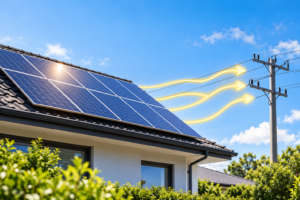
With electricity costs, household budgets and energy consumption all influencing purchasing decisions, many homeowners are asking the same question: is solar worth it in Australia in 2026?
For many households, installing rooftop solar panels can reduce electricity bills and provide greater control over energy use. However, the actual savings depend on your property’s electricity consumption, roof orientation, solar system size, installation cost and the amount of solar electricity you use directly.
Government incentives can also affect the upfront investment. Choosing the right system requires looking beyond the advertised price and understanding how solar will perform at your home.
In this guide, Solar Authority explains the main costs, savings opportunities, government incentives and payback considerations to help Australian homeowners decide whether solar panels are a worthwhile investment.
Is Solar Worth It in Australia in 2026?
For many Australian households, solar panels can be a worthwhile long-term investment, particularly when a substantial portion of the electricity generated is used at home.
Solar panels generate electricity during daylight hours, allowing your household to use solar power instead of buying as much electricity from the grid. Any eligible surplus may be exported for a feed-in credit under your electricity plan.
The financial benefits are generally strongest when you can use a significant amount of your solar generation directly.
For example, households that operate appliances during the day, work from home, run a pool pump or charge an electric vehicle while the sun is shining may be able to use more of their own solar electricity.
However, solar is not equally beneficial for everyone. A shaded roof, low daytime consumption, expensive installation or unsuitable system design can reduce the financial return.
Before making a decision, compare the estimated savings with the total installed cost and your expected electricity consumption.
How Much Does Solar Installation Cost in Australia?
The cost of installing solar panels in Australia varies according to system size, equipment quality, roof conditions, installation complexity and location.
There is no single price that applies to every property. A smaller system for a low-consumption household will generally cost less than a larger system designed for a family with higher electricity demand.
The main factors affecting solar installation costs include:
1. Solar System Size
Solar systems are commonly described by their capacity in kilowatts (kW). The appropriate size depends on your electricity consumption, available roof space and local connection requirements.
A larger system may generate more electricity, but it will not necessarily deliver a better financial return if your household cannot use or export the additional generation effectively.
2. Solar Panel and Inverter Quality
The equipment you choose affects the upfront price, energy production and long-term performance of your installation.
Compare panel efficiency, product warranties, inverter specifications and after-sales support. Ask your installer to explain why the proposed equipment suits your property rather than choosing solely on price.
3. Roof and Electrical Requirements
Installation costs can increase when a property has difficult roof access, significant shading, a complex roof layout or an electrical switchboard that requires upgrades.
Additional cabling, mounting requirements and other site-specific work may also affect the quote.
4. Solar Battery Installation
A battery adds to the upfront cost but allows you to store surplus solar electricity for later use.
Whether this additional investment makes financial sense depends on your evening electricity consumption, battery size, electricity tariffs, installation cost and any applicable incentives.
For a more accurate estimate, request a property-specific quote that separates the solar system cost from optional battery and electrical upgrade costs.
How Much Can You Save With Solar Panels?
Solar savings come primarily from reducing the electricity you purchase from your retailer.
When your solar panels generate electricity, your home can use that power directly. The more suitable solar electricity you consume, the less electricity you may need to purchase from the grid.
Your savings will depend on several factors.
Daytime Electricity Consumption
Households that use electricity during solar production hours can often capture more of the value generated by their panels.
Consider scheduling suitable appliances, washing machines and pool pumps during the day where practical. If you own an electric vehicle, daytime charging may also help increase solar self-consumption.
Solar System Generation
The amount of electricity your system produces depends on its capacity, local weather, roof orientation, shading, panel condition and inverter performance.
Two homes with similarly sized systems can produce different amounts of electricity because their roofs and surroundings differ.
Electricity Prices
The value of solar electricity depends partly on the amount you would otherwise pay for grid electricity.
When your household uses solar power directly, you avoid purchasing that electricity from your retailer. The financial benefit varies with your tariff and the time at which the electricity would otherwise have been purchased.
Solar Feed-in Tariffs
If your system exports surplus electricity to the grid, your retailer may provide a feed-in credit.
However, feed-in tariffs vary by electricity plan and location and are often lower than the price of electricity purchased from the grid. Export income should therefore be considered separately from the savings achieved through direct consumption.
A Simple Example of Solar Savings
Imagine a household’s solar system produces electricity that replaces $1,800 worth of grid electricity annually and earns another $150 in export credits.
The estimated annual financial benefit would be $1,950 before considering additional operating costs or other adjustments.
If the total installed system cost were $6,500, a simplified payback calculation would be:
$6,500 ÷ $1,950 = approximately 3.3 years.
This is an illustrative example, not a prediction of typical Australian solar costs or guaranteed savings. Actual savings may differ substantially, and a proper estimate should account for system degradation, maintenance, changing tariffs and any other relevant costs.
How Long Does Solar Take to Pay for Itself?
The solar system payback period is the estimated time required for accumulated financial benefits to equal the initial investment.
A basic calculation is:
Solar payback period = Net upfront system cost ÷ Estimated annual net savings
For example, a system costing $7,000 after applicable upfront discounts, with estimated annual net savings of $1,400, would have a simple payback period of five years.
However, this calculation is only a starting point. A more reliable assessment considers changing electricity prices, future generation, maintenance, financing costs and the value of any export credits.
The Australian Government’s SunSPOT solar and battery calculator can help homeowners estimate system costs, potential savings and payback based on their circumstances.
Use realistic assumptions when comparing quotes. A supplier promising a very short payback period should be able to explain the electricity tariffs, usage patterns and other figures behind that estimate.
Solar Rebates in Australia in 2026
Government incentives may reduce the upfront cost of installing eligible solar panels or batteries.
Two important programs to investigate are the Australian Government’s Small-scale Renewable Energy Scheme and the Cheaper Home Batteries Program.
Small-scale Renewable Energy Scheme (SRES)
The SRES provides support for eligible small-scale solar installations through small-scale technology certificates (STCs).
The number and value of certificates depend on applicable program rules and factors such as system size and installation location. The value is commonly incorporated into the installation quote as an upfront discount when the relevant rights are assigned to the installer or retailer.
Eligibility requirements apply, including requirements relating to approved equipment and appropriately accredited installers.
Ask your supplier to show the applicable incentive separately in your quote so you can understand the gross price and the amount payable after the discount.
Cheaper Home Batteries Program
The Australian Government’s Cheaper Home Batteries Program began on 1 July 2025. It supports eligible battery installations through an expansion of the SRES.
The program has been designed to reduce the upfront cost of eligible small-scale battery systems. The applicable discount and eligibility conditions should be checked at the time of purchase.
Battery incentives do not automatically make every battery financially worthwhile. Compare the final installed price with the expected savings and battery performance.
State and Territory Incentives
Some state and territory governments and local councils may offer additional rebates, loans or other assistance, subject to their own eligibility criteria.
Because programs and funding conditions can change, verify current details using official government resources before including an incentive in your budget.
Is Adding a Solar Battery Worth It?
A solar battery stores surplus electricity so that you can use it later, including in the evening when solar panels are no longer generating meaningful power.
Whether a battery is worth the additional cost depends on how much stored energy your household can use and how much value that energy provides.
When a Solar Battery May Be Worth Considering
A battery may be attractive if:
- Your home exports substantial surplus solar electricity during the day.
- You use considerable electricity in the evening.
- Your electricity tariff makes stored solar energy valuable.
- You want backup power and select a system configured to provide it.
- You qualify for an incentive that materially reduces the installed cost.
When a Battery May Not Be the Best Investment
A battery may offer a weaker financial return if your household uses most of its solar electricity during the day, has limited surplus generation or faces a high battery installation cost.
Battery capacity, usable energy, charging and discharging efficiency, warranty conditions and expected lifetime all affect the financial outcome.
Ask for a separate battery payback estimate rather than assuming the battery will pay for itself as quickly as the solar panels.
If you already have rooftop solar, compare the cost of adding a compatible battery with the expected value of the electricity you could store and use later.
Is Solar Worth It in Sydney, Melbourne, Brisbane and Other Australian Cities?
Solar can be beneficial across Australia, but the ideal system and its financial return vary by location.
Sydney
Homeowners in Sydney should consider roof orientation, local shading, electricity consumption and the export arrangements offered by their electricity network. A property-specific assessment can help determine an appropriate system size.
Melbourne
Melbourne households can benefit from rooftop solar, although generation varies with seasonal conditions and roof characteristics. Compare expected annual generation rather than relying on performance estimates from a different property or climate.
Brisbane
Brisbane’s solar potential makes rooftop solar worth investigating for many households. Daytime air conditioning, pool equipment and other electricity-intensive appliances may create opportunities to use more solar power directly.
Adelaide
Adelaide homeowners should consider both solar generation and the local network’s export requirements. Flexible export options and household energy usage may influence the best system configuration.
Perth, Canberra and Hobart
In Perth, Canberra and Hobart, the appropriate system size and likely savings depend on local solar conditions, roof characteristics, tariffs and consumption patterns. Local installation and connection requirements should be checked before selecting equipment.
Wherever you live, a tailored solar proposal is more useful than relying on a national average alone.
How to Decide Whether Solar Is Right for Your Home
Before choosing a system, work through these practical steps.
Step 1: Review your electricity bills. Understand your annual consumption, tariffs and when you use the most electricity.
Step 2: Assess your roof. Check available roof space, orientation, shading and any installation constraints.
Step 3: Compare suitable system sizes. Request generation estimates based on your property rather than automatically choosing the largest system available.
Step 4: Verify incentives. Confirm which government discounts or other programs apply and whether the quoted price already includes them.
Step 5: Compare detailed quotes. Review equipment, installation, warranties, approvals and after-sales service.
Step 6: Estimate the financial return. Compare realistic annual savings and total costs. If considering a battery, evaluate its economics separately.
Step 7: Check installer credentials. Confirm relevant accreditation, licensing, equipment eligibility and compliance requirements.
Why Choose Solar Authority for Your Solar Assessment?
Solar Authority helps Australian homeowners explore solar options that align with their electricity requirements, property and budget.
A suitable solar system should be designed around the household rather than selected solely on advertised price or panel capacity.
When assessing your options, consider:
- Solar system capacity and expected generation.
- Suitable panels and inverter specifications.
- Potential battery integration.
- Local network export requirements.
- Applicable government incentives.
- Expected savings and estimated payback.
Solar Authority encourages homeowners to compare the complete proposal, including equipment, installation and ongoing support, before making a decision.
If you are considering solar panels for your home, request an assessment to explore a suitable system for your needs.
Frequently Asked Questions
1. Is solar worth it in Australia in 2026?
Solar can be worthwhile for many Australian households when the system is appropriately sized, installation costs are reasonable and a meaningful amount of generated electricity is used at home. The actual financial return depends on individual circumstances.
2. How many years does it take for solar panels to pay for themselves?
There is no universal payback period. It depends on the net installation cost, electricity consumption, solar generation, tariffs, incentives and ongoing expenses. Use a property-specific estimate instead of assuming a fixed number of years.
3. Are solar panels still worth installing without a battery?
Yes, they can be. A battery is not essential for solar panels to reduce electricity bills. Households can benefit from using solar electricity directly, although their savings depend on their consumption patterns and system performance.
4. Are solar rebates available in Australia in 2026?
Eligible installations may benefit from Australian Government incentives, including the SRES for qualifying solar systems and the Cheaper Home Batteries Program for eligible batteries. Check current official program rules and eligibility before purchasing.
5. Does a bigger solar system always save more money?
No. A larger system may generate more electricity, but the additional generation must be used, stored or exported effectively. Roof space, connection requirements, installation costs and electricity consumption all affect the financial return.
6. How can I calculate my solar savings?
Use your electricity bills, expected solar generation, self-consumption, feed-in tariff and total installed cost to estimate the financial benefit. The Australian Government’s SunSPOT calculator can help estimate system costs, savings and payback.
Final Thoughts: Is Solar Worth It?
For many Australian homeowners, solar panels remain worth considering in 2026 because they can reduce reliance on purchased grid electricity and provide long-term financial benefits.
However, the right decision depends on the numbers for your home. Compare installation costs, realistic savings, applicable incentives and expected payback before committing to a system. Consider a battery only after assessing whether its additional benefits justify its cost.
Ready to explore solar for your home? Contact Solar Authority to discuss your requirements and request a tailored solar assessment. A well-designed system can help you make an informed decision about your household’s energy needs.
Disclaimer: This article is for general information only and does not guarantee savings, payback periods or eligibility for incentives. Government programs, electricity tariffs and installation prices can change. Confirm current conditions and obtain a tailored assessment before making a purchase.