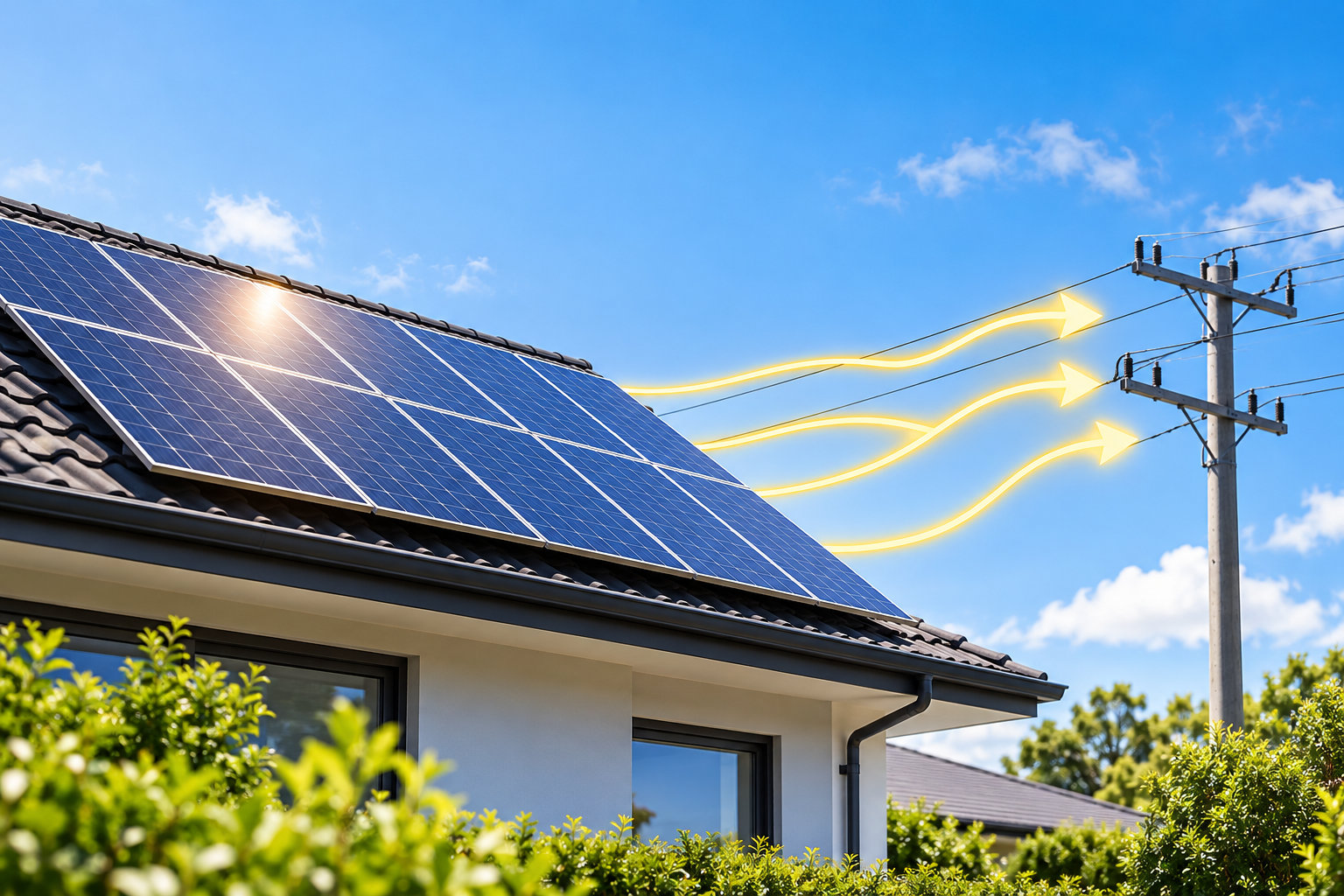
Australia’s rooftop solar industry continues to grow, giving households more opportunities to generate their own electricity and reduce energy bills. However, installing solar panels does not automatically mean you can send unlimited excess electricity back to the grid. Solar export limits in Australia determine how much surplus electricity your system can export, and the rules can vary depending on your electricity network, property and connection type.
For homeowners planning a new solar installation or upgrading an existing system, understanding these limits is an important part of choosing the right equipment. Flexible export connections, smart inverters and solar batteries can all influence how effectively you use the electricity your panels generate.
In this guide, Solar Authority explains how solar export limits work, why they matter in 2026, and what Australian homeowners can do to get more value from their solar systems.
What Are Solar Export Limits?
A solar export limit is the maximum amount of electricity your rooftop solar system is permitted to send to the electricity grid at a given time. Your solar panels may generate more power than your household needs, particularly during sunny periods when electricity consumption is low.
Your system can generally direct this electricity towards three uses:
- Household consumption: Powering appliances, lighting, air conditioning and other electrical equipment.
- Solar battery storage: Storing surplus electricity for later use, if a compatible battery is installed.
- Grid export: Sending excess electricity to the grid, subject to your approved connection and export settings.
For example, imagine your solar system is generating 8 kW while your home is using 2 kW. Approximately 6 kW of surplus power is available before considering other system losses or operating constraints.
If your approved export limit is 5 kW, your system may export up to that limit while the remaining available generation is reduced if it cannot be used or stored. This process is commonly called export curtailment.
The important point is that an export limit does not necessarily restrict the electricity your household can consume directly from the solar system. It primarily controls how much surplus electricity can flow back into the grid.
Why Do Solar Export Limits Exist in Australia?
Electricity networks were originally designed around power flowing from central generators towards homes and businesses. Rooftop solar has introduced a growing amount of electricity flowing in the opposite direction.
When many households export solar power simultaneously, particularly around midday, local network conditions can become more challenging to manage. Voltage levels, available network capacity and the performance of connected equipment all influence how much electricity can safely be exported.
Distribution network service providers (DNSPs) manage the local electricity infrastructure and set or administer connection requirements.
Export limits help networks manage these conditions while allowing more households to connect solar systems. The Australian Energy Regulator has also published guidance on how network providers should approach export limits and flexible export arrangements.
Fixed vs Flexible Solar Export Limits
Not all export connections operate in the same way. The two important arrangements homeowners may encounter are fixed export limits and flexible export limits.
1. Fixed Solar Export Limits
A fixed export limit establishes a maximum amount of electricity your system can export under the applicable connection arrangement.
For example, if your approved limit is 3 kW, your inverter must restrict exports to that level even when your solar panels could generate more surplus electricity.
The advantage is predictability. Your system operates within an established export ceiling. However, the arrangement may restrict the amount of surplus solar electricity you can sell to the grid during periods of high generation.
The actual fixed limit depends on your electricity network and approved connection. There is no single export limit that applies to every Australian property.
2. Flexible Solar Export Limits
Flexible exports allow the permitted export level to change in response to network conditions. Instead of applying one low ceiling at all times, a compatible system may be allowed to export more electricity when the network has capacity.
If network conditions become constrained, the permitted export level can be reduced.
This approach can help homeowners make better use of surplus solar generation without compromising network stability.
However, flexible export arrangements may require a compatible smart inverter, reliable internet connectivity, approved communications functionality and participation in the network provider’s connection process.
Before choosing your system, ask your installer which export arrangements are available at your address and which equipment is compatible.
Solar Export Limits by State: What Homeowners Should Know
Solar export rules are not identical across Australia. Requirements can vary by state, distribution network, suburb, property connection and installation date.
New South Wales
In New South Wales, export arrangements depend on the local network provider. For example, Ausgrid has published information about fixed and flexible export options for eligible new or upgraded solar systems, including changes planned for late 2026.
Under the arrangements described by Ausgrid, eligible flexible connections can allow higher exports when network conditions permit, while fixed connections provide a set export ceiling. Eligibility and applicable requirements must be confirmed with Ausgrid and your installer.
Homeowners should check their local network’s latest connection rules before selecting a solar inverter or system size.
Victoria
In Victoria, solar export requirements depend on the local distribution network and the property’s connection circumstances.
Before installing solar panels or upgrading an existing system, check the relevant distributor’s export requirements and confirm whether flexible export options are available. Your installer should also verify inverter compatibility and any required approvals.
Queensland
Queensland homeowners should check the rules applying to their local electricity network. Export capacity may depend on network congestion, the property’s electrical connection and the technical characteristics of the proposed system.
If you are considering a larger solar installation, ask whether your connection can accommodate the planned inverter capacity and export settings.
South Australia
South Australia has introduced flexible export arrangements to help manage high levels of rooftop solar generation. Depending on the applicable network arrangement, eligible systems may be able to export more electricity when network conditions allow.
The actual permitted export level can change with the connection type and network requirements, so homeowners should not assume that one published limit applies to every property.
Western Australia
Western Australia’s solar connection requirements also depend on the relevant electricity network. In the southwest interconnected system, updated requirements introduced from 1 May 2026 apply to new or upgraded solar and battery systems covered by the state’s rules.
Homeowners should check current requirements for inverter functionality, connection approval and export arrangements before installation.
Other States and Territories
Homeowners in Tasmania, the Australian Capital Territory and the Northern Territory should consult their relevant electricity network provider for the requirements that apply to their property.
Important: The examples above are general guidance, not confirmation of the export limit available at an individual address. Always check current network rules and obtain approval for your specific installation.
How Can Solar Export Limits Affect Your Electricity Bills?
Solar export limits can influence the financial return from your solar system, particularly when your panels produce more electricity than your household consumes.
There are three main considerations.
Lower Solar Feed-in Credits
When you export surplus electricity, your electricity retailer may provide a feed-in tariff under your electricity plan. The rate varies by retailer, plan and location.
If your system reaches its export limit, additional electricity may be curtailed instead of exported. You may therefore miss out on potential export credits.
However, feed-in tariffs are often lower than the price you pay to buy electricity from the grid. Using your own solar electricity directly can therefore be more valuable than exporting it.
Reduced Value During Peak Generation
Solar panels often generate the most electricity during the middle of the day. If your household is using very little power at that time, a greater proportion of generation may be available for export.
A restrictive export limit can reduce the amount of surplus electricity your system sends to the grid during those periods.
The effect on your savings depends on your generation profile, household consumption, export arrangement and electricity plan.
Greater Importance of Self-Consumption
Using solar electricity at home can help reduce the amount of electricity you need to purchase from your retailer.
Running suitable appliances during sunny hours, scheduling energy-intensive activities and charging an electric vehicle during solar production can increase self-consumption when practical.
These steps may improve the value of your solar generation without requiring a larger system or additional equipment.
Can a Solar Battery Help With Export Limits?
A solar battery can store surplus electricity that would otherwise be exported or, in some circumstances, curtailed because of an export limit.
Instead of sending all available excess generation to the grid, your system can direct suitable surplus electricity into the battery. You can then use the stored energy in the evening or at other times when your solar panels are generating less power.
Potential benefits include:
- Using more of your own solar electricity.
- Reducing electricity purchases during evening periods.
- Reducing some export curtailment where battery charging is available and appropriately configured.
- Providing backup electricity during outages if the battery system includes suitable backup functionality.
However, a battery is not automatically the most economical solution for every home.
Its value depends on the amount of surplus generation, your evening electricity consumption, battery capacity, installation cost, efficiency, electricity tariffs and available incentives.
A battery also cannot guarantee that all curtailed electricity will be recovered. Its charging power, remaining capacity and system configuration may limit how much surplus energy it can absorb.
Before investing, compare the expected savings against the total installed cost and estimated payback period.
How to Choose the Right Solar System Under Export Limits
Choosing a solar system involves more than selecting the largest number of panels that fit on your roof.
Consider these five factors before installation.
1. Understand Your Electricity Usage
Review your electricity bills and, where available, your interval consumption data. Identify when your household uses the most electricity and how much power it consumes during solar production hours.
This information helps determine an appropriate system size.
2. Check Your Local Network Requirements
Ask your installer to confirm your distribution network provider, applicable export limit, connection approval requirements and any restrictions affecting your proposed system.
Do this before finalising your equipment selection.
3. Choose a Compatible Inverter
A suitable inverter should meet the technical and connection requirements that apply to your installation. If flexible exports are available, confirm whether the inverter supports the required communications and control functions.
A system that is technically capable of generating more electricity may still require approved export settings.
4. Evaluate Battery Compatibility
If you are considering a solar battery now or in the future, check whether your proposed inverter and system design can support it.
Compare battery capacity, power output, warranty conditions and expected household demand rather than choosing a battery based on capacity alone.
5. Compare Total Costs and Expected Savings
Look beyond the advertised installation price. Ask for a clear breakdown of equipment, installation, electrical upgrades, approvals, applicable incentives and ongoing costs.
A reliable proposal should explain the assumptions behind estimated annual generation, self-consumption, export income and payback.
Does Solar Authority Help Homeowners Plan Around Export Limits?
Solar Authority helps Australian homeowners explore solar solutions that suit their property, electricity consumption and installation goals.
When comparing solar options, homeowners should consider more than panel capacity alone. Inverter compatibility, network export requirements, potential battery integration and household usage all influence how a system performs.
Before proceeding with an installation, confirm that the proposed equipment and design meet the requirements of your local electricity network.
If you are planning a new solar system or considering an upgrade, request an assessment to understand which options may suit your property.
Frequently Asked Questions
1. What is the solar export limit in Australia in 2026?
There is no single nationwide export limit for every home. The permitted amount depends on your distribution network, connection type, approved system configuration and applicable rules.
2. Do solar export limits reduce the electricity my panels generate?
An export limit primarily controls how much surplus electricity can flow to the grid. If your household cannot use the surplus and your battery cannot store it, the inverter may reduce generation to remain within the permitted limit.
3. What is the difference between fixed and flexible solar exports?
A fixed export arrangement uses a set export ceiling. A flexible arrangement can adjust the permitted export level according to network conditions, potentially allowing higher exports when capacity is available.
4. Can I increase my existing solar export limit?
Possibly. You may need to apply to your local network provider, meet technical requirements or update equipment and connection settings. Approval is not guaranteed.
5. Is a solar battery worth buying if I have an export limit?
It depends on how much surplus energy you have, how much you use in the evening, the battery’s installed cost and your electricity tariff. A battery assessment should estimate the likely savings rather than assume a guaranteed financial benefit.
6. How can I find my property’s solar export limit?
Contact your local distribution network provider or ask your solar installer to check your connection approval and current export settings.
Final Thoughts
Solar export limits are an important consideration for Australian homeowners investing in rooftop solar in 2026. Understanding the difference between fixed and flexible exports can help you select compatible equipment, plan for future upgrades and make informed decisions about battery storage.
The best solution depends on your property’s network connection, electricity consumption, roof space and budget.
Explore your solar options with Solar Authority. Request an assessment to understand the system design, export requirements and battery options that may suit your home.
Disclaimer: This article provides general information only. Electricity network requirements, export arrangements, government programs and eligibility conditions can change. Confirm current requirements with your local network provider and a suitably qualified solar professional before making an installation decision.