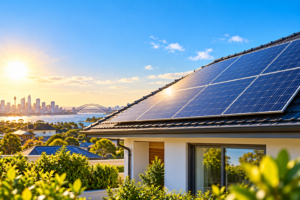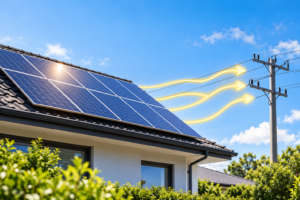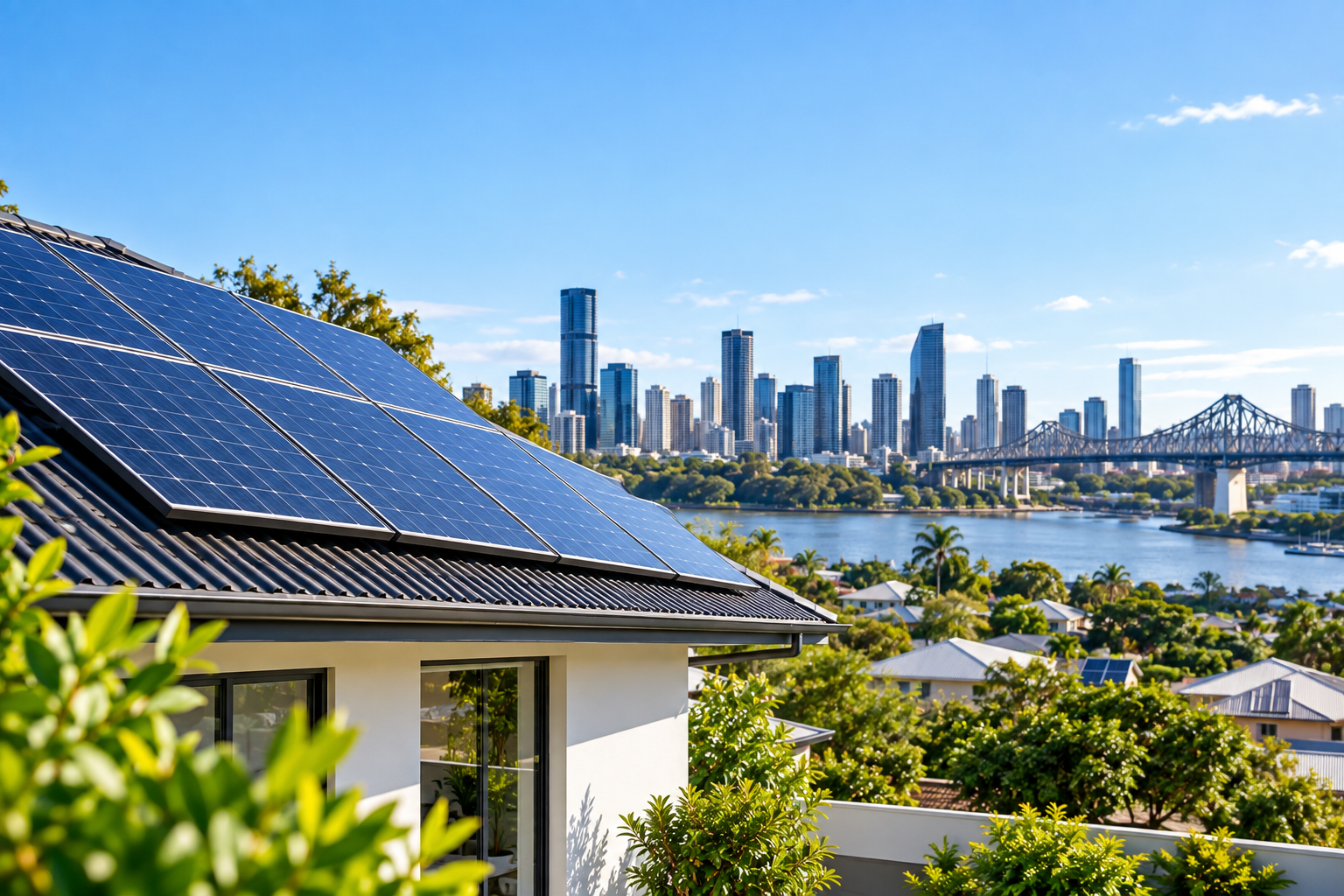
Brisbane is one of Australia’s most attractive locations for rooftop solar. With plenty of sunshine throughout the year, many homeowners are looking at solar power as a way to generate their own electricity, reduce their reliance on the grid and make better use of their home’s roof space.
But choosing solar panels is not simply about finding the cheapest package.
The right solar installation in Brisbane should be designed around your electricity consumption, roof characteristics, solar generation potential, future energy requirements and the quality of the equipment and installation.
If you’re considering solar panels in Brisbane, this guide explains how a solar system works, what affects the cost, what incentives may be available, how the installation process works and what to look for when choosing a solar installer.
Why Is Brisbane Good for Solar Power?
Brisbane’s climate provides a strong opportunity for rooftop solar generation. A well-designed system can produce electricity during daylight hours, helping households use more renewable energy directly rather than purchasing all of their electricity from the grid.
The potential value of solar depends on more than sunshine, however.
Your results can be influenced by:
- Daily electricity consumption
- Roof orientation and available roof area
- Shading from trees or nearby buildings
- Solar panel efficiency
- System size
- Inverter performance
- Electricity tariffs
- Your household’s daytime energy usage
- How much solar electricity you use versus export
This is why two Brisbane homes with identical solar systems can achieve very different results.
At Solar Authority, we believe solar should be designed around the property and the household rather than simply selling the largest available system.
What Does a Solar Power System Include?
A complete rooftop solar system contains several important components.
Solar Panels
Solar panels capture sunlight and convert it into DC electricity.
When comparing solar panels in Brisbane, don’t focus only on the number of panels. Look at panel efficiency, product warranty, performance warranty, manufacturer reputation, temperature performance and suitability for the local environment.
Brisbane systems can experience high temperatures, intense sunlight, heavy rainfall and severe weather conditions. Equipment quality and installation workmanship therefore matter over the long term.
Solar Inverter
The inverter converts the DC electricity produced by your solar panels into AC electricity that can be used by household appliances.
It is one of the most important components of the system.
When comparing inverters, consider:
- Inverter efficiency
- Warranty period
- Monitoring capabilities
- Number of MPPTs
- Compatibility with your panels
- Battery compatibility
- Backup functionality, if required
- Manufacturer reputation
A cheaper inverter is not automatically better value if its warranty, performance or support is limited.
Mounting and Electrical Equipment
Panels require an appropriate mounting system that is suited to the roof structure.
The installation also requires cabling, protection equipment, isolators and other electrical components.
A professional installer should assess your roof and electrical infrastructure before installation rather than treating every Brisbane property as identical.
How Much Solar Do You Need in Brisbane?
There is no universal solar system size that works for every home.
A small household with relatively low electricity consumption may need a very different system from a larger Brisbane home with:
- Multiple air conditioners
- A swimming pool
- Electric hot water
- A heat pump
- An electric vehicle
- Large refrigeration loads
- Home offices
- Other high-energy appliances
Your recent electricity bills are one of the best starting points for determining the appropriate system size.
An installer can assess how much electricity you use during the day and evening and then estimate how much solar generation could be useful.
It is also important to consider future electricity consumption.
For example, if you’re planning to purchase an EV or install additional air conditioning, designing a solar system around today’s electricity consumption alone may not be the best long-term decision.
Common Solar System Sizes for Brisbane Homes
The right size depends on the individual property, but homeowners commonly compare systems in several different capacity ranges.
A professional assessment should consider:
Small household: Lower electricity consumption and limited roof space.
Medium household: Moderate electricity use with several appliances operating throughout the day.
Large household: Higher electricity consumption, multiple air conditioners, pool equipment or other significant loads.
Solar + battery household: A system designed to generate enough solar energy to charge a battery and supply household loads.
The goal isn’t simply to install the biggest system possible.
The goal is to install a system that provides useful generation while making financial and practical sense for your household.
Brisbane Solar Rebates and Incentives in 2026
One of the most common questions homeowners ask is whether Queensland offers a solar rebate.
For most eligible rooftop solar installations, the main upfront incentive is the Australian Government’s Small-scale Renewable Energy Scheme (SRES). Eligible systems can receive Small-scale Technology Certificates (STCs), which are generally assigned to the installer or retailer in exchange for an upfront discount on the purchase price.
The value of the incentive depends on factors including system size, location and the applicable certificate settings.
The Australian Government also introduced the Cheaper Home Batteries Program from 1 July 2025, which provides around a 30% discount for eligible small-scale battery systems through an expansion of the SRES.
What About Queensland’s Solar Rebates?
Queensland currently has a number of targeted programs rather than one universal solar rebate available to every Brisbane homeowner.
For example, the Supercharged Solar for Renters program provides eligible Queensland landlords with rebates of up to $3,500 for installing rooftop solar on qualifying rental properties. The program opened in December 2025.
The rebate is based on the solar system capacity:
- 3 kW to under 4 kW — up to $2,500
- 4 kW to under 5 kW — up to $3,000
- 5 kW or more — up to $3,500
This program is specifically aimed at eligible rental properties, so homeowners should not assume they qualify simply because they live in Brisbane.
For current eligibility and program availability, always check the relevant Queensland Government information before signing a solar contract.
What Happened to the 44c Queensland Feed-in Tariff?
Some older Queensland solar articles still mention the famous 44-cent Solar Bonus Scheme feed-in tariff.
However, this is not available to new customers.
Existing eligible customers can continue receiving the 44c/kWh tariff until its scheduled expiry on 1 July 2028, provided they continue to meet the eligibility requirements.
Therefore, a Brisbane homeowner installing a new solar system today should not calculate their expected savings using the old 44c feed-in tariff.
Instead, you should compare current electricity plans and available feed-in tariffs when assessing the financial value of your system.
Should You Install a Solar Battery in Brisbane?
A battery isn’t necessary for every solar customer.
However, it can be useful for households that generate significant solar electricity during the day but consume much of their electricity in the evening.
Without a battery, surplus solar electricity can generally be exported to the electricity grid according to your electricity plan.
With battery storage, some of that excess energy can be stored and used later.
For example:
Daytime: Solar panels generate electricity → household uses electricity → surplus energy charges the battery.
Evening: Solar generation decreases → household can use stored battery energy.
This can increase your solar self-consumption and reduce the amount of electricity purchased from the grid.
However, battery economics depend on your usage profile, electricity prices, solar generation, battery capacity, installation cost and available incentives.
Solar Authority recommends assessing these factors rather than assuming every Brisbane home needs a battery.
Solar Battery and Future Energy Needs
A battery can become even more useful if you expect your electricity consumption to increase.
For example, you may be planning to:
- Buy an electric vehicle
- Install additional air conditioning
- Replace gas appliances with electric alternatives
- Install a heat pump
- Increase your daytime solar consumption
- Improve household backup power
The right battery size should be based on your actual electricity profile and future plans.
Installing a battery that is too small may leave you buying significant amounts of electricity from the grid, while an unnecessarily large battery can increase the upfront cost without providing proportional benefits.
How Does Solar Installation in Brisbane Work?
A professional solar installation in Brisbane should involve more than simply placing panels on the roof.
Step 1: Property Assessment
The installer assesses:
- Roof condition
- Roof orientation
- Available roof space
- Shading
- Electrical infrastructure
- Switchboard
- Existing solar equipment
- Potential panel locations
Step 2: Energy Assessment
Your electricity bills and usage patterns should be reviewed.
This helps determine how much electricity you consume and when you consume it.
Step 3: System Design
The installer can then recommend:
- Solar panel capacity
- Number of panels
- Panel configuration
- Inverter size
- Battery options
- Monitoring system
- Backup requirements
Step 4: Installation
The solar panels, mounting equipment, inverter and electrical components are installed by appropriately qualified professionals.
Step 5: Testing and Connection
The system is tested and commissioned, with applicable network connection requirements completed before the system operates as intended.
Step 6: Monitoring
Modern solar systems can provide monitoring through an app or online portal.
Monitoring allows homeowners to see:
- Solar generation
- Household consumption
- Grid imports
- Solar exports
- Battery charging
- Battery discharge
This information can help you understand how your system is performing.
Choosing a Solar Installer in Brisbane
The installer you choose can be just as important as the solar panels themselves.
Queensland Government recommends consumers look for appropriately accredited installers and provides information about the New Energy Tech Consumer Code and Solar Accreditation Australia.
Since 29 February 2024, Solar Accreditation Australia (SAA) has been responsible for installer and designer accreditation that was previously managed by the Clean Energy Council.
When comparing solar installers in Brisbane, ask:
- Is the installer appropriately accredited?
- Who is actually carrying out the installation?
- What panels and inverter models are included?
- What product warranties apply?
- What workmanship warranty is provided?
- Is monitoring included?
- Is the switchboard suitable?
- Could additional installation costs apply?
- What happens if the system needs servicing?
- Is the retailer a New Energy Tech Approved Seller?
Don’t choose a solar company purely because it offers the lowest quote.
A professionally designed system with reliable equipment and good after-sales support can provide much better long-term value.
Why Solar Authority?
At Solar Authority, our focus is helping Australian homeowners make informed decisions about solar, batteries and home energy systems.
Rather than treating every property the same, we encourage homeowners to consider their actual electricity consumption, property characteristics and future energy goals.
Our approach focuses on helping you understand:
- Solar system sizing
- Solar panel options
- Battery storage
- Government incentives
- Installer accreditation
- System performance
- Electricity usage
- Long-term value
Solar Authority also provides resources covering solar batteries, battery sizing, solar pricing, blackout protection and Brisbane solar systems so homeowners can research their options before making a decision.
Is Solar Installation Worth It in Brisbane?
For many Brisbane households, solar can be a practical way to generate renewable electricity and reduce reliance on grid power.
But the financial outcome depends on the system you install and how you use it.
A good solar investment should consider:
System size + electricity usage + solar generation + self-consumption + electricity tariff + equipment quality + installation quality
—not simply the advertised price.
This is why getting a property-specific assessment is usually more useful than relying on a generic “best solar system” recommendation.
Frequently Asked Questions
Is solar worth it in Brisbane?
Solar can be worthwhile for many Brisbane homes because the region has strong solar generation potential. However, your actual savings depend on electricity consumption, system size, roof conditions, shading, electricity tariffs and how much solar energy you use.
How much does solar installation cost in Brisbane?
The cost varies according to system size, panels, inverter, roof characteristics, installation complexity and whether a battery is included. The most accurate price comes from a property-specific assessment.
What solar rebate is available in Brisbane in 2026?
Eligible rooftop solar systems can generally access the Australian Government’s Small-scale Renewable Energy Scheme through STCs. Additional Queensland programs may apply to specific groups, such as eligible rental properties.
Is the Queensland 44c solar feed-in tariff still available?
No. The 44c/kWh Solar Bonus Scheme is not available to new customers. Existing eligible customers can retain it until 1 July 2028, subject to the scheme’s conditions.
Do I need a battery with solar panels?
No. A battery is optional. It may be worthwhile if you generate surplus solar during the day and use significant electricity in the evening.
How many solar panels do I need?
The number depends on your electricity consumption, panel wattage, roof space, shading and desired system capacity. A professional assessment should be completed before deciding on the number of panels.
What should I look for in a Brisbane solar installer?
Look for appropriate accreditation, quality equipment, clear warranties, transparent pricing, experienced installers and reliable after-sales support. Queensland Government recommends consumers check installer accreditation and consumer protection information before purchasing solar.
Can I add a battery later?
In many cases, yes, but the compatibility of your existing solar system, inverter and switchboard should be assessed before deciding. If battery storage is likely to be part of your future plans, it can be useful to consider battery compatibility when selecting your initial solar system.
Final Thoughts
Installing solar in Brisbane can be a smart step toward greater energy independence, but the best system isn’t necessarily the biggest or cheapest one.
Your roof, electricity consumption, solar generation, future energy requirements, equipment quality and installation standards should all be considered before making a decision.
Government incentives can also reduce the upfront cost of eligible systems, but incentive programs and eligibility rules can change. Always verify current information through official government sources before committing to an installation.
If you’re considering solar installation in Brisbane, Solar Authority can help you understand your solar and battery options and make a more informed decision based on your property and energy needs.
Generate more of your own power. Store what you need. Use your energy smarter with Solar Authority.