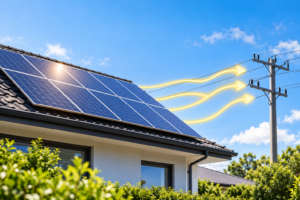

As more Australian homes install rooftop solar panels, many homeowners are asking: “What exactly is solar battery storage, and am I missing out by not getting one?” Solar battery storage is the technology that allows you to save surplus solar energy and use it when it’s most valuable — like overnight or during grid outages. It’s one of the most effective ways to get more value from your solar system, lower your energy bills, and increase energy independence.
🌞 What Is Solar Battery Storage?
A solar battery storage system works with your rooftop solar panels to capture excess electricity generated during the day and store it for later use. Instead of exporting all your unused solar energy to the grid for a relatively small feed‑in tariff, a battery lets you keep that energy for yourself.
When your solar panels produce more electricity than your home is using, that extra energy charges the battery. Then, when your panels aren’t producing — for example at night or early morning — your home can draw from the battery instead of buying power from the grid.
This storage process increases solar self‑consumption, reduces your reliance on the electricity grid, and can cut your energy bills significantly.
⚙️ How Solar Batteries Work
Solar battery systems involve several key parts:
🔋 Battery Module
Stores solar energy as electricity for later use. Common household batteries today mostly use lithium‑ion technology with high efficiency (often 80–90 %).
🔌 Inverter & System Integration
The inverter converts the DC electricity generated by solar panels into AC electricity your home uses. Batteries are connected either via the same inverter (DC‑coupled) or through an additional inverter/charger (AC‑coupled).
☀️ Solar Panels
Generate electricity during daylight. Surplus production charges the battery.
⚡ Grid Connection
When your battery runs out or solar cannot meet demand, your home draws electricity from the grid — ensuring a seamless power supply.
🤔 Why Solar Battery Storage Matters
💡 1. Reduce Electricity Bills
A battery lets you use your own stored solar energy at times when electricity from the grid is expensive, especially during peak evening hours — reducing what you pay to your energy retailer.
☀️ 2. Maximise Solar Self‑Consumption
Without storage, excess solar is often exported at low feed‑in tariff rates. With a battery, you can use more of the energy you generate, making your panels work harder for you.
🔌 3. Backup Power During Outages
Some solar battery systems can provide backup power during blackouts — meaning essential appliances stay on even when the grid is down.
🌿 4. Greater Energy Independence
Battery storage reduces your reliance on the grid and helps you maintain more control over your energy supply — which can be valuable as electricity prices rise.
🌏 5. Environmental Benefits
By storing and using excess renewable energy instead of drawing from fossil‑fuel‑dependent grid power, you reduce your household’s carbon footprint.
📊 Financial & Practical Considerations
While solar batteries add value, they aren’t a one‑size‑fits‑all solution. Consider these key points:
✔ Battery Size & Usage
Your daily energy consumption, solar panel output, and usage patterns will determine the ideal battery size for you. More storage means more power available during peak times and outages.
✔ Costs vs Savings
Solar batteries are an investment. Federal and state incentives can significantly lower upfront costs, and savings grow over time as you use more stored solar and less grid electricity.
✔ Location & Solar Conditions
Regions with strong sunlight — like Queensland or Western Australia — may see quicker returns because systems generate and store more energy.
📌 FAQs — Solar Battery Storage
Q: Do solar batteries work without solar panels? Yes — some batteries can use off‑peak grid electricity to charge and discharge later, but paired with solar they deliver the greatest cost savings.
Q: Can I install a battery on an existing solar system? Yes — most homes with existing solar can add battery storage through AC coupling or hybrid inverters installed by qualified technicians.
Q: How long does a solar battery last? Modern batteries generally last 5–15 years, depending ontechnology, cycles, and how they are used.
Q: Do batteries work in cloudy weather? Yes — they store excess power when available and discharge it when needed, but less solar means less stored energy to use later. Hybrid setups help optimise performance year‑round.
Q: Can batteries help with rising electricity prices? Yes — by using stored solar energy instead of buying from the grid during high‑cost periods, you can significantly reduce your energy bills.
🔚 Conclusion — Is Solar Battery Storage Worth It?
Solar battery storage is a powerful addition to rooftop solar systems — enabling greater savings, energy independence, and resilience for Aussie homes. As electricity costs rise, and as federal and state incentives continue to support batteries, installing solar storage offers long‑term financial and environmental benefits.
Whether you want to cut your bills, prepare for grid outages, or maximise your clean energy usage, a solar battery can be a smart part of your energy future.
Ready to explore the right battery for your home and lifestyle? Solar Authority can help design a tailored solar + battery solution based on your energy needs.