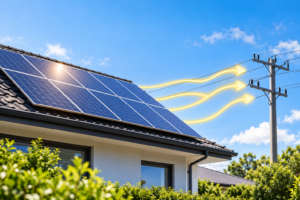

A solar hybrid inverter is a powerful piece of technology that does more than a traditional solar inverter — combining solar conversion, energy storage management and grid interaction in one smart unit. Hybrid inverters are becoming increasingly popular in Australian homes that want greater energy independence, lower bills, and future flexibility.
🤔 What Is a Hybrid Inverter?
A hybrid inverter integrates three core functions into a single device:
1. Solar conversion: It converts direct current (DC) from your solar panels into alternating current (AC) for use in your home.
2. Battery management: It controls charging and discharging to and from a connected battery.
3. Grid coordination: It intelligently balances solar, battery and grid power based on demand and settings.
This means hybrid inverters do what a regular solar inverter does — and more, all without needing separate battery inverters.
⚡ How Hybrid Inverters Work
Solar hybrid inverters constantly monitor the flow of electricity from your solar panels, batteries, home loads and the grid. Their energy management logic typically follows a priority like this:
1. Solar generation for immediate home use
2. Charge the battery with excess solar power
3. Export any leftover solar to the grid
4. Use stored battery power when solar output falls
5. Draw from the grid when neither solar nor battery can supply enough
Some systems also offer advanced modes like off-peak grid charging, time-of-use optimisation and zero-export restrictions where required.
👍 Benefits of a Hybrid Inverter
🚀 1 — Energy Independence
Hybrid inverters store excess solar power so you can use it at night or on cloudy days, cutting reliance on expensive grid electricity.
💸 2 — Lower Electricity Bills
By prioritising self-consumption (using your solar + battery before grid power), you reduce peak cost purchases and can save substantially over time.
🔋 3 — Battery Compatibility and Growth
With a hybrid inverter, you can add or upgrade batteries easily — even after your original solar installation — without replacing the inverter.
🛡️ 4 — Backup Power
Many hybrid systems can automatically switch to battery power during grid outages, providing essential backup to your home.
📱 5 — Smart Control & Monitoring
Modern hybrid inverters often include smartphone/cloud monitoring, letting you track generation, battery status and usage to improve energy decisions.
🧠 6 — Optimised Solar Usage
Hybrid inverters dynamically decide the best use for solar — supplying your home, charging batteries, or exporting — based on time, tariffs and consumption.
⚠️ Considerations Before You Buy
💵 Higher Upfront Cost
Hybrid inverters cost more initially than traditional string inverters because they include battery management and advanced controls.
🔌 Battery Required for Full Value
To get the most benefit — especially backup power — a battery is typically needed. Without one, the inverter can still operate like a standard solar inverter, but its full potential isn’t realised.
⚙️ Compatibility Matters
Not all batteries work with every hybrid inverter — always confirm compatibility with your chosen battery brand and system design.
🛠️ Installation Complexity
Hybrid systems are more complex to install and configure, so they require skilled installers familiar with both solar and battery systems.
📊 Hybrid Inverter vs Traditional Solar Inverter
Feature Traditional Inverter Hybrid Inverter
Solar DC → AC Conversion ✔ ✔
Battery Storage Control ✖ ✔
Grid Interaction & Export ✔ ✔
Backup Power Support ✖ ✔
Future Battery Upgrade Limited Designed for it
Smart Energy Management Basic Advanced
Hybrid inverters handle more energy sources and use real-time logic to optimise how your system runs — something traditional inverters are not designed to do.
📌 FAQs — Solar Hybrid Inverters
Q: Do hybrid inverters require batteries? Not necessarily. They can run without batteries, operating like a regular solar inverter, but their energy storage and backup features only work when a battery is connected.
Q: Can I add a battery later? Yes — one of the biggest advantages of hybrid inverters is that you can install batteries later without changing the inverter.
Q: Do hybrid inverters work during blackouts? Many models do — if a battery is connected and properly configured, they can switch to backup power automatically when the grid goes down.
Q: Are hybrid inverters more expensive? Yes — they cost more upfront than standard string inverters, but they can deliver greater savings and flexibility over the life of your system.
🏁 Conclusion — Is a Hybrid Inverter Worth It?
A solar hybrid inverter is an excellent choice for Australian homeowners who want:
to future-proof their solar system, to add or expand battery storage easily, to reduce grid reliance and power bills, and to gain backup power capabilities.
Although the upfront cost is higher, the long-term benefits — smarter energy management, lower electricity costs, enhanced self-consumption, and increased independence — often justify the investment. With energy prices rising and more households adopting storage solutions, hybrid inverters are becoming the practical mainstream choice for solar + battery setups.